

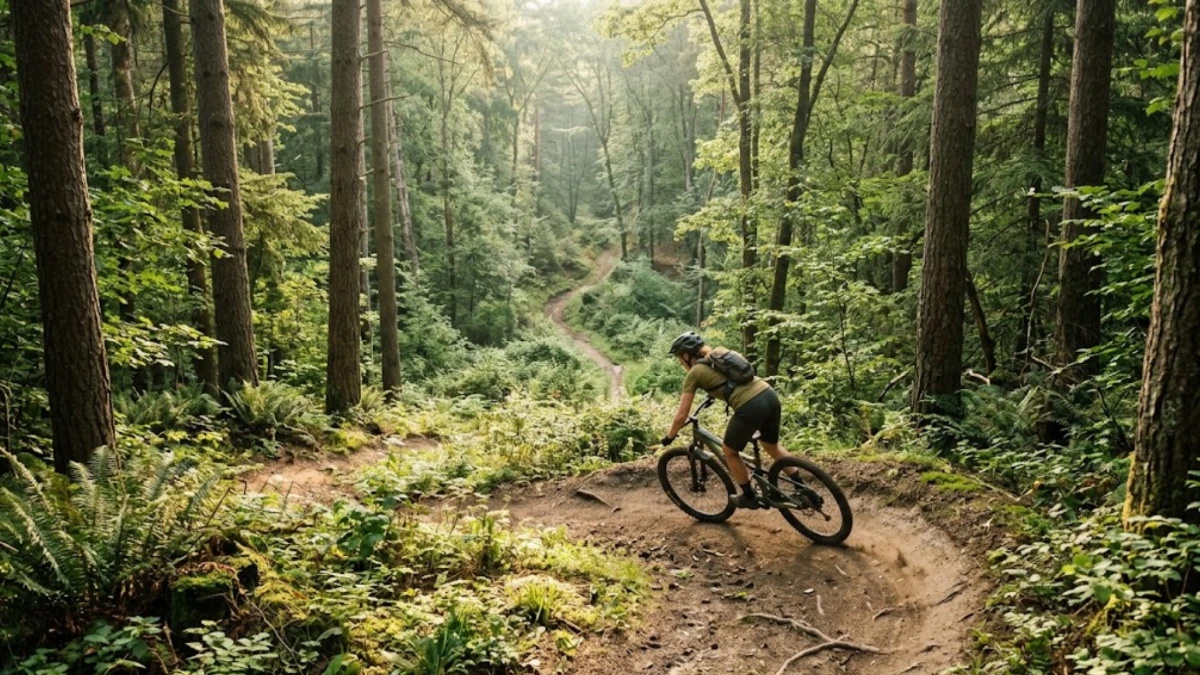
I’ve ridden trails that scared the hell out of me and trails that felt like flying without ever leaving the ground. That’s the range you’re signing up for with this sport, and it’s exactly why “just go find a trail” isn’t good enough advice for most riders — the wrong trail on the wrong day can turn a good afternoon into a bad one fast.
This guide is the map. We’ll cover the different types of trails and how to tell them apart, how bike parks and lift-served riding work, how to actually choose a trail and show up prepared, how to plan a trip beyond your local loop, and a rundown of the destinations — in the US and abroad — worth building a trip around. Each section gives you the full picture; if you want deeper detail on any one piece.
Finding Your Trail Type
Trails get rated for difficulty the same way ski runs do — greens, blues, blacks, sometimes double-blacks — and that rating is the first thing you should check before you check anything else. It’s not about ego. It’s about matching the terrain to where you actually are on the bike, because a trail built for advanced riders isn’t just “harder”; it’s often built with features that assume you already know how to handle them.
Green-rated trails are wide, smooth, and forgiving — no surprise rock gardens, no exposed drops. If you’re brand new, or you’re bringing kids or a nervous partner along, this is where you start. I cover exactly what to look for in Beginner-Friendly Mountain Bike Trails, and if you’re specifically planning a ride the whole family can do, Family-Friendly Mountain Bike Trails: Fun for All Ages goes deeper on what makes a trail genuinely kid-appropriate versus just “easy on paper.”
Once you’ve got some hours in the saddle, flow trails are usually the next thing that hooks people. These are built trails — dirt sculpted into berms and rollers so the trail itself carries your speed instead of you fighting for it. I still remember the first flow trail that clicked for me; it felt less like riding and more like the trail was doing half the work. Mastering Flow Trails: A Mountain Biker’s Guide breaks down the body position and pumping technique that make this style of riding feel effortless, not exhausting.
If your idea of a good day is covering distance and climbing under your own power, cross-country is your lane. It’s less about big features and more about endurance, navigation, and reading varied terrain over a long ride. Best Cross-Country MTB Loops rounds up routes worth the drive.
Singletrack is the term you’ll hear thrown around constantly, and for good reason — it’s the backbone of most trail systems. Narrow, immersive, technical in places, and genuinely rewarding once you’ve got the skills to read a line and commit to it. Top 10 Intermediate Singletrack Trails is where I’d point anyone past the beginner stage looking for that next step up.
Then there’s the gravity side of things — downhill and enduro — which I’ll get into more in the next section, but they’re worth naming here too. Guides to Downhill Mountain Bike Parks and Extreme Enduro Trails for Advanced Riders are built for riders chasing speed and technical descending rather than distance.
Gravity, Lifts, and Bike Parks
Downhill riding runs on a completely different model than everything above — you’re not pedaling up; a lift is doing that for you, which means you can rack up way more descending in a day than you’d ever manage under your own power. Whistler Bike Park: The Ultimate Rider’s Handbook is the reference point here; it’s the park most riders measure everything else against, and for good reason.
If you’ve never ridden lift-served terrain before, it’s worth understanding how different the experience is from a normal trailhead — loading your bike, lift etiquette, how runs are graded compared to natural trails. Lift-Accessed Mountain Biking: What to Expect walks you through it all so your first day at a park doesn’t feel like a crash course you’re taking in real time.
And if you’re trying to decide whether a bike park trip or a natural trail weekend is the better call for where you’re at, Bike Park vs. Natural Trails: Which is Right for You? lays out the honest trade-offs — bike parks give you volume and consistency, natural trails give you variety and, frankly, a more unpredictable kind of fun.
Choosing Well and Riding Right
Picking the right trail matters more than people give it credit for. It’s not just about difficulty rating — it’s about current conditions, how much time you actually have, and whether the trail suits the bike you’re riding. How to Choose the Right Mountain Bike Trail is the piece I’d send anyone standing at a trailhead app, scrolling through fifteen options with no idea where to start.
Once you’re out there, how you ride matters too. Yielding to uphill riders, calling out when you’re passing, not skidding through corners and tearing up the trail surface — none of this is complicated, but it’s the difference between being a welcome presence on the trail and being the rider everyone talks about afterward. Mountain Bike Trail Etiquette: Ride Responsibly covers the unwritten rules that keep trail access open for everyone.
And before any of that — before you even load the bike — a quick pre-ride check saves you from the kind of mechanical surprise that turns a two-hour ride into a two-hour walk. Tire pressure, brake feel, quick releases, chain tension. Pre-Ride Trail Check: Essential Bike & Gear Inspection takes two minutes and has saved more than one ride of mine.
Planning the Trip
Local loops are great, but at some point you’ll want to explore further, and that takes a little more planning than throwing the bike in the truck. Trail-finding apps have genuinely changed how riders scout new terrain — real-time conditions, difficulty ratings, other riders’ notes. Best Apps for Mountain Bike Trail Navigation covers what’s actually worth having on your phone. If you’re riding somewhere remote enough that cell service isn’t reliable, a dedicated unit is worth the investment — GPS Devices for MTB Navigation: A Buyer’s Guide breaks down what to look for.
For anything beyond a day trip, packing right makes or breaks the trip. Packing for a Multi-Day MTB Trip: Essential Gear List is the checklist I use before longer trips — the stuff that’s easy to forget until you’re two days in without it. And once you’ve got gear sorted, Finding Bike-Friendly Accommodations covers what to actually look for so your bike isn’t an afterthought wherever you’re staying — secure storage, wash stations, that kind of thing.
Destination Guide: United States
The US has an absurd amount of terrain variety, and a handful of regions have earned reputations.
Colorado is the obvious starting point for many riders — high-alpine trails, serious elevation, and terrain that ranges from mellow to genuinely demanding depending on where you point the bike. Ultimate Guide to Colorado Mountain Bike Trails covers the regions worth building a trip around.
Utah’s a different animal entirely—Slickrock, red rock, and a riding surface that feels almost otherworldly compared to loamy forest trails. Top Mountain Biking Destinations in Utah is the overview, and Moab Mountain Bike Trails: Iconic Rides Explored goes deep on the destination most riders have on a list somewhere. Sedona MTB Adventures: Red Rock Riding covers the other red-rock destination worth knowing about, with its own distinct character.
California covers everything from coastal redwoods to high Sierra terrain, so it’s hard to generalize — California’s Hidden MTB Gems focuses on spots that don’t get the same attention as the obvious names but deserve it.
The Pacific Northwest is its own thing — dense forest, loam, roots, and a trail culture that’s been building for decades. Expect rain, and expect it to be worth it anyway. Pacific Northwest MTB Trails: A Comprehensive Guide covers the full picture.
And don’t sleep on the East Coast — Pisgah, Kingdom Trails, and a handful of other spots put out genuinely technical, well-built riding that surprises people who assume the best trails are all out west. East Coast Mountain Biking: Best Spots & Seasons covers where and when to go.
Destination Guide: Beyond the US
If you’re willing to travel further, a few international destinations are worth the trip on their own merits.
The European Alps offer lift-served riding through some of the planet’s most dramatic terrain, alongside backcountry routes for riders who want to earn the descent. Mountain Biking in the European Alps: Epic Destinations covers the regions worth targeting.
Scotland’s a completely different flavor — wild, technical, natural trails that test you in ways manicured trail systems don’t. Scottish Highlands MTB Trails: Wild Rides gets into what makes this destination worth the trip.
And New Zealand’s North Island, particularly around Rotorua, has built one of the more respected trail networks outside North America and Europe. New Zealand’s North Island MTB: Must-Ride Trails rounds up what to prioritize if you make the trip.
Riding Beyond the Obvious
Riding doesn’t have to stop when the sun goes down or the season changes, and honestly, some of the most memorable rides I’ve had came from stepping outside the standard daytime, fair-weather window.
Night riding changes a familiar trail completely — your world shrinks to whatever your lights show you, and it sharpens your focus in a way daytime riding doesn’t. Night Riding Mountain Bike Trails: Tips & Gear covers the lighting setup and safety considerations you should know before your first night out.
Winter doesn’t have to mean the bike sits in the garage either. Fat bikes handle snow well, and firm, cold trails ride differently but aren’t off-limits. Winter Mountain Biking Tips for Cold Weather Trails covers what changes when temperatures drop.
And sometimes the ride is as much about the view as the trail itself — certain routes are built or naturally positioned to deliver scenery that’s worth the climb on its own. Mountain Bike Trails with Epic Views rounds up the ones where the payoff is as much visual as physical.
Further Reading
Trail types: Beginner-Friendly Mountain Bike Trails · Family-Friendly Mountain Bike Trails · Mastering Flow Trails · Best Cross-Country MTB Loops · Top 10 Intermediate Singletrack Trails · Guide to Downhill Mountain Bike Parks · Extreme Enduro Trails for Advanced Riders
Bike parks & gravity riding: Whistler Bike Park · Lift-Accessed Mountain Biking · Bike Park vs. Natural Trails
Choosing & riding right: How to Choose the Right Mountain Bike Trail · Mountain Bike Trail Etiquette · Pre-Ride Trail Check
Trip planning: Best Apps for Mountain Bike Trail Navigation · GPS Devices for MTB Navigation · Packing for a Multi-Day MTB Trip · Finding Bike-Friendly Accommodations
US destinations: Colorado · Utah · Moab · Sedona · California’s Hidden MTB Gems · Pacific Northwest · East Coast Mountain Biking
International destinations: European Alps · Scottish Highlands · New Zealand’s North Island
Conditions & angles: Night Riding · Winter Mountain Biking Tips · Mountain Bike Trails with Epic Views
For more general background on mountain biking, including safety and bike types, Wikipedia’s Mountain Biking page is a solid starting point. If you want to understand how trails actually get built and maintained, the International Mountain Bicycling Association (IMBA) publishes the guidelines most trail systems follow for classification and responsible riding.
Ride as a Mindset
None of this — the ratings, the gear lists, the destination guides — matters more than just getting out there. Every rider I know who’s stuck with this sport for years started on a green trail somewhere, unsure of what they were doing. The trails on this list, and the ones we’ll keep adding as this guide grows, are here to shorten that learning curve, not replace the part where you go ride.
Pick a trail that matches where you’re at today, not where you want to be in a year. The rest comes with time on the bike.