

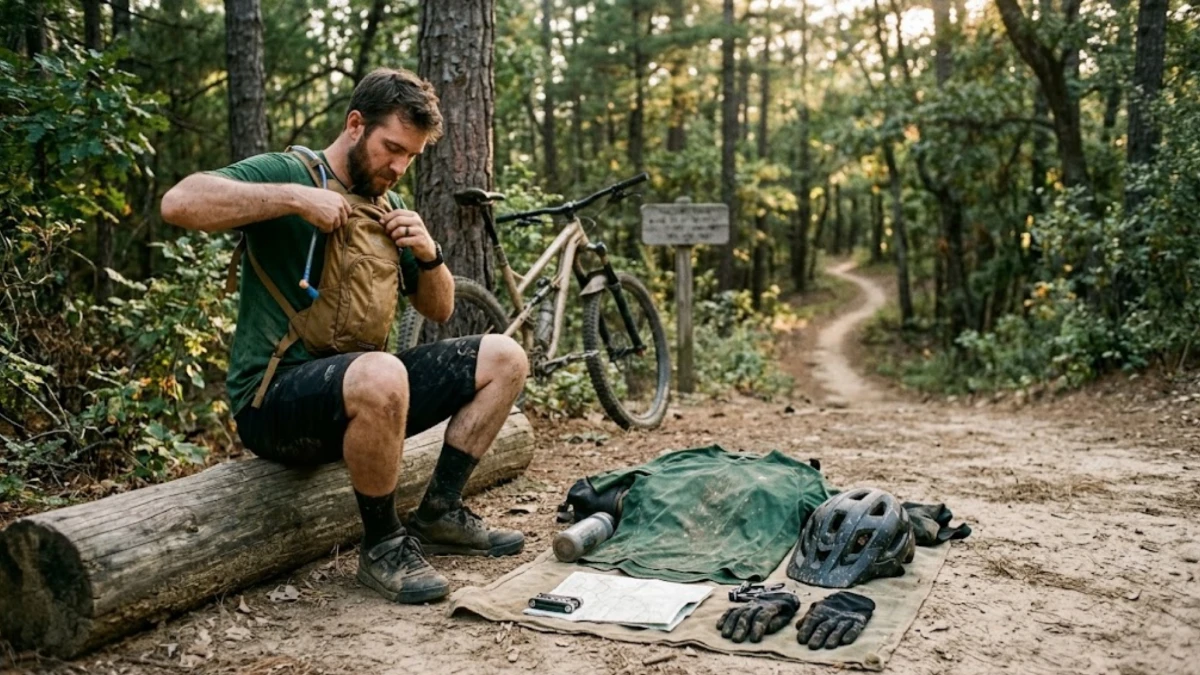
I’ve walked into more trailheads than I can count wearing the wrong thing — soaked through on a “quick” ride that turned into three hours of rain, or sweating through cotton on a climb that should’ve been easy. Gear doesn’t make you a better rider. But the right setup gets out of your way, and the wrong one will remind you of every mistake for the rest of the ride.
This guide is the starting point. It covers everything from the helmet on your head to the socks in your shoes — what actually matters, what’s genuinely optional, and how to think about building a kit that fits your riding rather than someone else’s checklist. We’ll go discipline by discipline, season by season, and budget by budget. Use the table of contents below to jump to what you need right now, or read it start to finish if you’re building a setup from scratch.
Protection You Don’t Ride Without
A short list of gear isn’t optional, and it starts with your helmet. I’ve replaced two after crashes that looked minor from the outside — both times, the foam told a different story once I got a look inside. A good mountain bike helmet fits snug without pinching, covers more of the back of your skull than a road helmet does, and should be replaced after any real impact, even if it looks fine. In the US, every helmet sold has to meet the CPSC’s federal safety standard, and it’s worth understanding what that standard actually tests for before you buy — the Consumer Product Safety Commission has a solid rundown of what that protection means in practice. We go deep on fit, styles, and what separates a good lid from a great one in our guide to choosing the best mountain bike helmet for trail safety.
Gloves come next, and not just for grip. Your hands take the brunt of a fall — it’s instinct to put them out — so a decent pair of full-finger gloves is cheap insurance against road rash and worse. Our piece on the top mountain bike gloves for grip, comfort, and protection breaks down what to look for beyond just padding.
Eyewear matters more than most beginners think. A low branch or a rock kicked up from the trail ahead can end your ride fast, and glasses or goggles with interchangeable lenses handle everything from bright sun to overcast singletrack. We cover both: mountain bike eyewear to protect your vision on the trail and, for the dustier, faster stuff, mountain bike goggles for clarity and protection on dusty trails.
Then there’s what’s on your feet. Regular sneakers flex in all the wrong places and slip off wet pedals. Whether you go clipless or flat is one of the bigger decisions you’ll make, and it genuinely depends on your riding style and how much you trust your feet to stay put — I ride both depending on the trail. Our breakdown on essential mountain bike shoes covers clipless versus flat pedal options in detail.
Pads and Body Armor: How Much Do You Actually Need
Not every ride calls for pads, but knowing when they do will save you some skin. Knee pads are the most common piece of added protection, and a lot of riders — myself included — end up wearing them on nearly every ride once they get used to the feel. Elbow pads and more substantial body armor come into play as the terrain gets rowdier or you’re pushing into new skills. Our guide to mountain bike knee pads walks through the different styles, and if you’re trying to figure out where the line is between a pad and full armor, mountain bike body armor versus pads compares the two directly.
Apparel That Works As Hard As You Do
The difference between a jersey and a cotton t-shirt isn’t style — it’s what happens to that fabric once you start sweating. Mountain bike jerseys and shorts are made from synthetic blends designed to move moisture away from your skin instead of holding onto it, which is why you stay comfortable on a long climb instead of clammy and chafed. If you want the deeper explanation of what’s actually happening in those fabrics, understanding mountain bike clothing fabrics and technology is worth a read.
On the bottom half, mountain bike shorts are cut looser than road cycling shorts for freedom of movement, usually with a built-in padded liner or one worn underneath. Pants add coverage for colder days or rougher trails. We cover fit, fabric, and when to choose one over the other in our guide to durable mountain bike shorts and pants for every trail.
Up top, a good jersey should move with you when you’re leaned over the bars, not just when you’re standing still in a shop mirror — our guide to mountain bike jerseys covers comfort, style, and function in more depth. For a general, brand-neutral look at building a mountain bike wardrobe from the ground up, REI’s expert advice on what to wear mountain biking is a solid outside reference.
Carrying Water, Tools, and Everything Else
You’ll go through more water than you expect, especially on climbs. Some riders run bottles on the frame; I lean toward a hydration pack on longer days because it carries more and leaves room for tools and snacks. Neither is wrong — it depends on ride length and how much else you’re carrying. We compare hydration packs and water bottles for mountain biking.
For shorter rides, a hip pack keeps the weight off your back and holds just what you need — water, a snack, your phone. Our guide to mountain bike hip packs covers the minimalist end of that spectrum. For bigger days, frame bags strap directly to the bike and free up your back entirely; mountain bike frame bags do what they’re meant for on longer rides. And if you’re eyeing multi-day trips rather than day rides, bikepacking gear essentials go beyond the backpack into what actually makes an overnight trip work.
Tools and Lights for Longer Days on the Bike
Flats and loose bolts happen to everyone eventually, and fixing them on the trail beats a long walk out. A basic kit — multi-tool, tire levers, a spare tube or plug kit, and a way to air back up — covers most of what goes wrong. We walk through what belongs in yours in basic mountain bike tool kits for trailside repairs.
If you want to extend your rides past sunset, or you’re curious about night riding altogether, you’ll need real lights — one for the bars to light the trail, one for your helmet to follow where you actually look. It’s a completely different way to experience a familiar trail. Our guide to the best mountain bike lights for night riding gets into what separates a usable setup from a frustrating one.
Dressing for Every Season and Condition
Weather doesn’t check the forecast before you commit to a ride, so it’s worth having the right layers. A solid rain shell keeps a wet day from turning miserable — we cover that in waterproof mountain bike apparel for rainy day trails. When temperatures drop, layering becomes the whole game, and choosing winter mountain biking gear means staying warm without overheating on the climbs.
Base layers do more work than people give them credit for — they’re what actually manages your temperature underneath everything else, in both directions. We get into the specifics in choosing mountain bike base layers and undergarments. And don’t sleep on socks: the right pair prevents blisters and adds real comfort over a long ride, which we cover in choosing the right mountain bike socks for comfort and fit.
Matching Gear to Your Riding Discipline
Not every rider needs the same kit, and this is where things start to diverge based on what you actually do on the bike. Cross-country riders prioritize light weight and efficiency over max protection — our guide to XC mountain biking apparel covers that lightweight, performance-first approach. Enduro sits in the middle: you’re pedaling up and racing down, so gear needs to handle both without weighing you down, which our enduro mountain biking gear list breaks down piece by piece.
Downhill is a different animal entirely — full-face helmets, heavier pads, and sometimes full body armor, since the terrain and speeds demand it. We cover the specifics of downhill mountain biking gear for maximum protection and durability, and go deeper on the most aggressive end of protection with full-body mountain bike armor.
Fit, Personal Style, and Sizing That Actually Fits
Gear that doesn’t fit right is gear you’ll stop wearing, no matter how good it looks on the rack. Try things on, move around in them, and make sure nothing restricts you mid-pedal-stroke. Beyond fit, your kit is also one of the more fun ways to show some personality on the trail — we get into that in customizing your mountain bike gear for personal style. And if standard sizing hasn’t worked for you, our guide on gear for plus-size mountain bikers covers options built for real comfort and fit, not an afterthought size tacked onto the end of a line.
Caring For Your Gear — and Where It’s Headed
Mud, sweat, and sun break gear down faster than most people expect, and a little maintenance goes a long way toward making it last. We cover the basics — washing, storage, what needs hand-care versus what can go in the machine — in cleaning and maintaining your mountain biking apparel.
It’s also worth knowing where the gear itself is headed. Protection has come a long way from basic foam and fabric — integrated protection systems in mountain biking gear look at how jerseys and packs are starting to build safety features directly into everyday kit. For the bigger picture, the evolution of mountain biking gear traces the path from bare-bones basics to today’s high-tech standard. And if you care where your gear comes from as much as how it performs — I do — sustainable mountain biking gear covers the brands actually doing the work on recycled materials and cleaner manufacturing.
Building Your Kit, One Ride at a Time
Nobody shows up to their first ride with a fully dialed setup, and you shouldn’t feel like you need to. Start with the non-negotiables — helmet, gloves, eyewear, shoes that actually grip your pedals — and let the rest come as you figure out what kind of riding you’re drawn to. Your kit will change as you do. Buy used where it makes sense, buy new where safety is on the line, and don’t let a gear list talk you into more than you actually need.
The gear is there to disappear once you’re moving — to let you focus on the trail instead of your temperature, your grip, or whether your knees are covered. That’s the whole point. Get the basics right, and the rest is just refinement.