

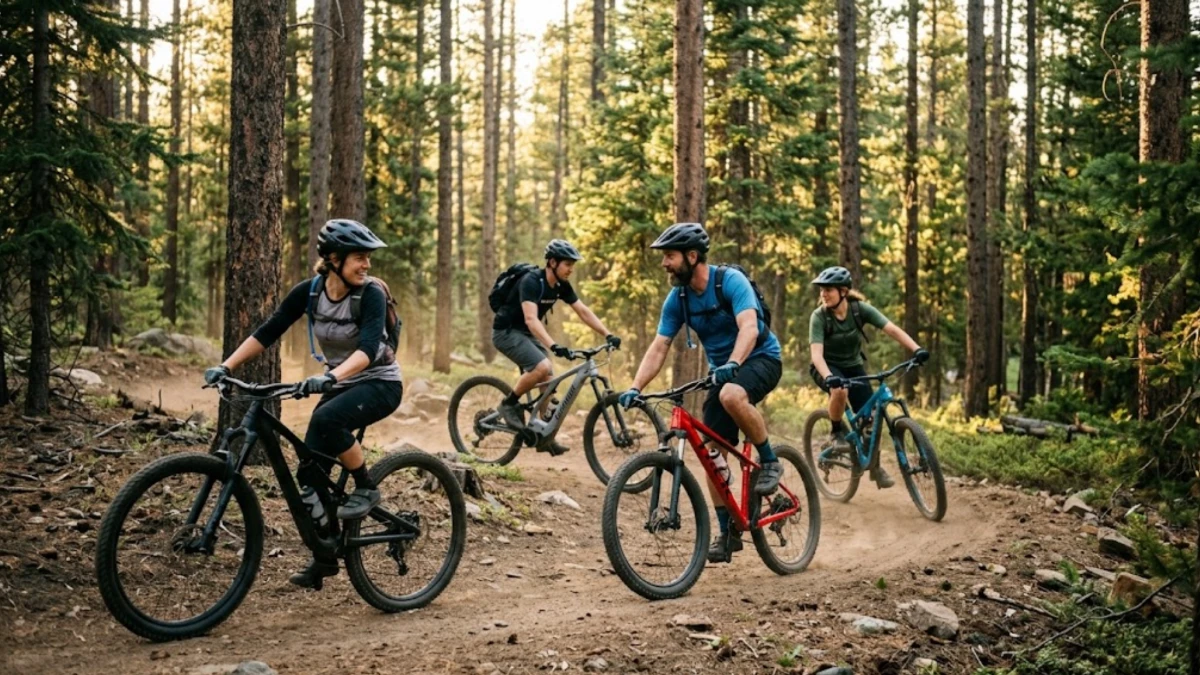
Ask ten mountain bikers what bike you should buy, and you’ll get ten different answers — and honestly, they’re probably all right, just for different trails. I’ve ridden a good chunk of these bike types myself over the years, and the truth is there’s no single “best” mountain bike. There’s only the best bike for what you actually ride.
This guide walks through every major type of mountain bike out there — what it’s built for, how it feels underneath you, and who it actually makes sense for. We’ll cover suspension basics, the core riding categories from cross-country to downhill, the more specialized builds like fat bikes and dirt jumpers, and the details — wheel size, geometry, frame material — that quietly shape how any of these bikes ride. Jump to whatever section is relevant to you, or read straight through if you’re getting your bearings.
Hardtail vs. Full Suspension: The Big Fork in the Road
Before you even think about categories, there’s a bigger fork in the road — literally. A hardtail has suspension up front only; the rear end is rigid. A full-suspension bike has shocks front and back. That one decision shapes almost everything about how a bike feels.
Hardtails are direct. Every ounce of pedaling effort goes straight to the back wheel, which makes them efficient climbers and honestly great teachers — riding a hardtail on a rough trail forces you to actually pick good lines, because there’s nothing back there to bail you out. I still ride one on smoother local trails just for that connected feeling. Full-suspension bikes trade a bit of that efficiency for comfort and control — they soak up chatter, keep your rear wheel tracking the ground on rough descents, and let you carry more speed with less fatigue.
Neither is objectively better. It comes down to your trails and your budget — hardtails are usually the more wallet-friendly entry point. We’ll have a full buyer’s breakdown covering exactly when a hardtail makes sense versus when full suspension earns its keep, along with a deeper look at “travel” (how much cushion a fork or shock actually has) in its own dedicated guide. For the mechanics of how that travel and sag actually work, REI’s mountain bike suspension basics guide is a solid technical reference.
Cross-Country Bikes: Built for Miles and Momentum
Cross-country — XC — bikes are the marathon runners of the mountain bike world. Less suspension travel, lighter frames, and a forward riding position for efficient climbing. These bikes want to cover ground, not just survive a descent.
If your local trails are more flowy singletrack than chunky rock garden, and you care about covering miles efficiently or racing, an XC bike rewards that instinct. They’re not built to bash through rough terrain — that’s not the assignment. We’ll break down what defines an XC bike, plus compare it directly with trail bikes for anyone stuck deciding between the two, since that’s one of the most common questions I get from newer riders.
Trail Bikes: The All-Rounder Everyone Ends Up On
If I had to recommend one type of bike to someone who wants to ride and isn’t chasing a specific discipline, it’s a trail bike. More suspension travel than an XC bike, a slightly more relaxed geometry, and genuinely capable in both directions — up and down.
This is the bike that climbs to the top without punishing you and still has your back on the way down when things get rowdy. It’s not the fastest climber, and it’s not the most planted descender, but it’s good at both, which is exactly the point. Most riders — myself included, for a huge chunk of my riding — end up here. Respecting the trails you ride matters regardless of what you’re on; IMBA’s rundown on why mountain biking matters is worth a read if you’re new to the etiquette side of things. We’ll go deeper on trail bikes specifically, plus which bike type actually suits most trail centers, in their own guides.
Enduro & All-Mountain: Built for the Way Down
Enduro bikes climb well enough to get you to the top, but the real point is the descent. More travel than a trail bike, slacker geometry for stability at speed, beefier components that can take a hit. “All-mountain” is often used almost interchangeably — same idea, big mountains, big demands.
I’ve ridden enduro bikes on climbs that felt like a chore, then completely understood why five minutes into the descent. If you love technical descending, jumps, and going fast downhill more than you love an efficient uphill, this category prioritizes that. We’ll cover the full picture in a dedicated enduro guide, along with the subtle differences between all-mountain and enduro builds for anyone trying to split hairs between the two.
Downhill Bikes: Pure Gravity, No Compromise
Downhill bikes don’t pretend to climb. Maximum suspension travel, the slackest geometry you’ll find, heavy and built like tanks — because their entire job is surviving steep, fast, technical descents at speed, usually accessed by a chairlift or a shuttle rather than pedaling up.
These aren’t bikes for your average local loop. They’re bike-park and race-track machines, and riding one on flat ground feels like dragging an anchor. If gravity-fed terrain and bike parks are your scene, we’ll have a full breakdown of exactly what defines a downhill build.
Fat Bikes: Built for Terrain Other Bikes Can’t Touch
Fat bikes are unmistakable — tires 3.8 inches wide or more, run at low pressure so they float instead of sink. They’re not a gimmick once you’ve ridden one on snow, sand, or loose terrain that would swallow a normal tire whole.
Most are hardtails, kept simple to match their purpose. They’re not fast in the conventional sense, but they open up riding conditions that would otherwise shut most bikes down entirely, and honestly, they’re fun in a way that’s hard to explain until you’ve tried one. We’ll dig into the full case for fat bikes and the specific terrain and conditions they’re best suited to in their own guides.
Electric Mountain Bikes: More Climbing, Less Excuses
E-MTBs look like normal mountain bikes with a motor and battery built into the frame, and they come in every flavor we’ve already covered — XC, trail, enduro, all of it — just with assistance added.
What they change is what’s possible in a ride: longer routes, harder climbs, more laps at the bike park, keeping pace with faster friends without blowing up on the first hill. I’ve got mixed feelings about them on certain trail systems, but there’s no denying what they open up for riders who’d otherwise be shut out of bigger days on the bike. We’ll cover the types and real trade-offs of e-MTBs and help you figure out whether one fits your riding style, with dedicated guides.
Dirt Jumpers & Slopestyle: Built for Airtime
Dirt jumpers are stripped-down, tough little hardtails — smaller wheels, simple single-gear setups, built to take repeated hits at skate parks and dirt jump spots without complaint. Slopestyle bikes are a close cousin with a bit of rear suspension added, built for bigger jumps and the kind of linked-trick runs you see in competition.
Neither is a bike you’d take on a long trail ride — that’s not what they’re for. They’re built purely for airtime and style. We’ll break both down in more depth, covering what separates them and what to look for in each, in their own guides.
Freeride Bikes: Big Terrain, Bigger Commitment
Freeride sits between enduro and downhill — built for big natural terrain, drops, and creative line choices rather than pure race speed. These bikes are seriously robust, built to absorb hits that would fold a lesser frame.
It’s a smaller, more specialized category than most on this list, but for riders drawn to big-mountain lines and natural features over groomed trails, nothing else quite fits the job. We’ll cover what defines freeride riding and building in its own dedicated guide.
Bikepacking Bikes: Carrying Your Whole Trip
Bikepacking bikes are built for multi-day adventures — your bike becomes the pack mule, carrying gear across mounting points built into a sturdy, durable frame. They can be hardtail or full suspension, but comfort and reliability over long days in the saddle usually take priority over aggressive descending capability.
There’s something genuinely different about a trip where your bike carries everything you need. We’ll cover what actually makes a bike bikepacking-ready in its own guide.
Wheel Size, Geometry & Frame Material: The Details That Shape the Ride
A few underlying details shape how every bike on this list actually rides, regardless of category.
Wheel size comes down to 29-inch versus 27.5-inch (some bikes even mix the two in a “mullet” setup). Bigger wheels roll over obstacles more easily and hold momentum better; smaller wheels are more agile and quicker to flick around tight trails. Geometry — the angles of the frame — determines how stable or how quick-steering a bike feels; a slacker head tube angle favors high-speed stability, a steeper one favors climbing and tight handling. Frame material — aluminum, carbon fiber, or steel — trades off weight, cost, and ride feel; aluminum is the affordable workhorse, carbon shaves weight at a price, and steel gives a classic, forgiving ride.
None of these details define a bike type on their own, but they’re worth understanding once you’ve narrowed down a category — we’ll cover each in its own dedicated guide.
Choosing Your First Mountain Bike
Here’s the part that actually matters most: don’t overthink your first bike. For most beginners, a well-specced hardtail or trail bike covers most of the riding you’ll actually do. Start with what trails are realistically accessible to you, not what looks coolest online.
A few things worth knowing going in — budget doesn’t have to mean compromise (there’s a real difference between cheap and just budget-conscious), technical climbing ability depends more on rider skill than most people assume, and demoing a bike before buying will tell you more than any spec sheet. REI’s guide to choosing a mountain bike is a solid resource if you want a second opinion alongside ours. We’ll cover exactly what to look for in your first bike, how budget and high-end builds actually differ, and which bike type handles technical climbing best, across their own dedicated guides.
Built for Everyone: Kids and Women’s-Specific Bikes
Fit matters as much as bike type, especially outside the standard adult sizing range. Kids need properly sized bikes, not scaled-down adult frames — the wrong size makes a bike harder to control and honestly kills a lot of kids’ enthusiasm before it has a chance to grow. Some brands also build women’s-specific frames with different geometry and contact points, though it’s worth understanding when that actually matters versus when a unisex frame is the better call.
We’ll cover kids’ sizing in detail, along with a full look at choosing the right first bike for a kid, and a straight breakdown of whether a women’s-specific bike is the right call for you, in their own guides.
Mountain Bike vs. Gravel Bike
Gravel bikes get lumped into off-road conversations a lot these days, but they’re a genuinely different tool. Mountain bikes are built for technical singletrack — rocks, roots, drops. Gravel bikes are closer to road bikes with wider tires, built for faster riding on unpaved roads and smoother terrain, not chunky trail features.
If you’re trying to figure out which one actually fits how you want to ride, we’ll cover that comparison directly in its own guide. For a broader look at where mountain biking as a sport comes from and how it’s evolved, Wikipedia’s overview of mountain biking is a decent starting point.
What’s Coming Next on the Blog
Every topic above gets its own dedicated deep-dive as we roll out the cluster articles under this guide. Here’s what’s coming:
Suspension & bike basics: Hardtail vs. Full Suspension: A Buyer’s Guide · When to Choose a Hardtail Mountain Bike · Benefits of Full Suspension Mountain Bikes for Trail Riding · Understanding Mountain Bike Suspension Travel
Core riding categories: What is a Cross-Country Mountain Bike? · Cross-Country vs. Trail Bikes: Which is Right for You? · Understanding Trail Mountain Bikes: Your All-Around Ride · The Best Mountain Bike Type for Trail Centers · The Complete Guide to Enduro Mountain Bikes · All-Mountain vs. Enduro Bikes: Subtle Differences Explained · What Defines a Downhill Mountain Bike?
Specialized Builds: The Ultimate Guide to Fat Bikes · Riding Styles and Terrain for Fat Bikes · Electric Mountain Bikes Explained: Types and Benefits · Is an e-MTB Right for Your Riding Style? · Introduction to Dirt Jumper Bikes: Style and Purpose · Slope Style Bikes Explained: Jumps, Tricks, and Flow · Freeride Mountain Bikes: The Art of Big Mountain Riding · What is a Bikepacking Mountain Bike?
Build details: The Role of Wheel Size in Mountain Bike Performance (27.5 vs 29) · How Mountain Bike Geometry Affects Handling · Mountain Bike Frame Materials: Steel, Aluminum, Carbon.
Buying & Fit: Best Mountain Bikes for Beginners: A Starter’s Guide · What to Look for in Your First Mountain Bike · Which Mountain Bike Type is Best for Technical Climbing? · Comparing Budget vs. High-End Mountain Bike Types · Choosing the Best Mountain Bike for Kids · Kids Mountain Bike Sizing Chart and Guide · Women’s Specific Mountain Bikes: Do You Need One?
Related riding: Mountain Bike vs. Gravel Bike: Which for Off-Road?
Wrapping Up
If there’s one thing I want you to take from all this, it’s that there’s no wrong door into this sport. Every type of bike above exists because someone needed it to solve a specific problem — climbing faster, descending harder, floating over sand, carrying a week’s worth of gear into nowhere. Your job isn’t to pick the “correct” one. It’s to figure out what you actually want to be doing on a bike, and let that point you toward the right category.
Get something that fits the riding you’ll actually do, spend time on it, and let your preferences sharpen from there. That’s how it worked for me, and it’s how it works for pretty much everyone I know who’s stuck with this sport for the long haul.