

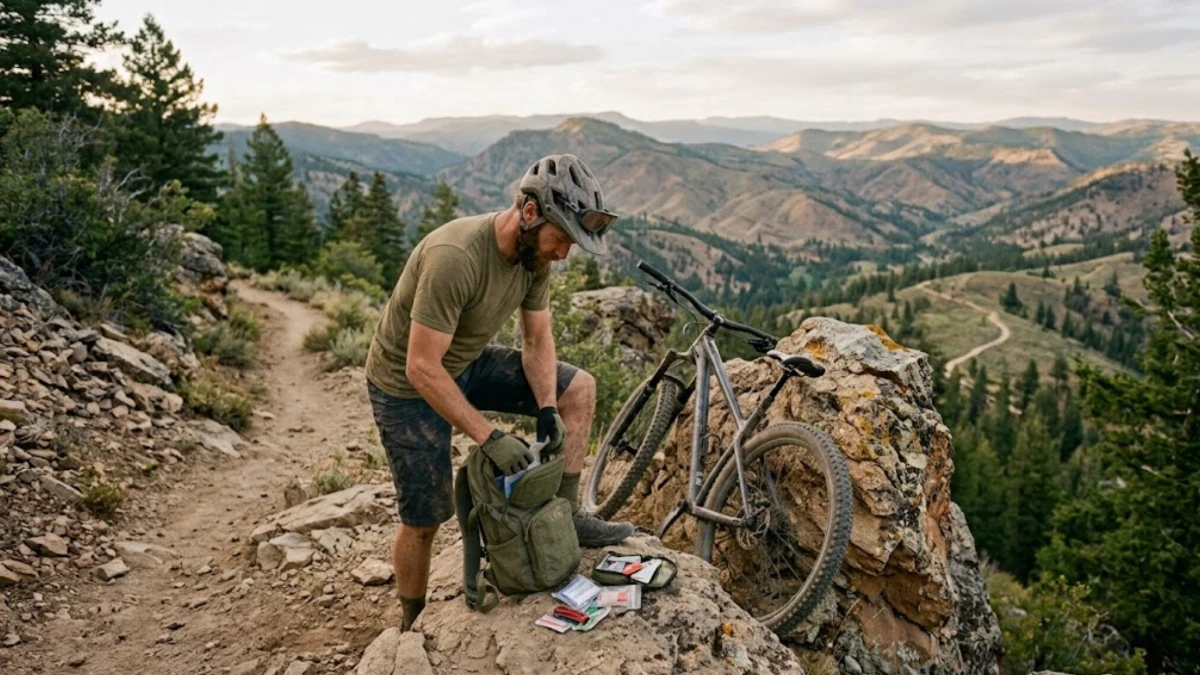
I’ve had exactly one ride end in an ambulance, and it wasn’t the gnarliest trail I’ve ridden — it was a mellow blue line I’d ridden a hundred times, on a day I skipped my usual checks because I was in a hurry. That’s the thing about safety on a bike: it’s rarely the terrain that gets you; it’s the shortcut you took getting ready.
This guide pulls together everything I wish someone had handed me early on — pre-ride habits, the gear that actually matters, how to read a trail and the people on it, what to do when something goes wrong, and when it’s worth paying for real training. It’s not a substitute for a first aid course, and it’s not meant to be read cover to cover before every ride. Think of it as the map — each section below hands off to a deeper cluster guide where you can go as far into a topic as you need.
Pre-Ride Prep: Checklist, Fit, and Mechanical Checks
Most of the safety work happens before you ever clip in. A five-minute look-over — tire pressure, brakes, suspension sag, quick-release levers, chain — catches the stuff that turns into a walk of shame or worse, three miles deep. I keep this loose enough that it doesn’t feel like a chore, but I don’t skip it, and The Essential Pre-Ride Mountain Bike Safety Checklist walks through exactly what I check and in what order.
Fit matters more than people give it credit for. A bike that’s too long, too short, or with your saddle in the wrong spot changes how you handle a sudden stop or an off-camber section—it’s not just a comfort issue; it’s a control issue. Bike Fit for Safety: Adjusting Your Mountain Bike for Optimal Control covers the adjustments that make the biggest difference.
Brakes get their own attention because they’re the single system you cannot compromise on. Spongy levers, worn pads, contaminated rotors — all of it shows up exactly when you need full stopping power and don’t have it. Brake Safety: Inspecting and Maintaining Your Mountain Bike Brakes and Preventing Catastrophic Mechanical Failures on the Trail goes deeper into what to catch before it catches you. If something does fail mid-ride, Trailside Bike Repair Essentials: Fixing Common Issues Safely covers the fixes worth knowing how to do with what’s in your pack.
Helmets and Protective Gear
I’ve cracked two helmets in my riding life, and both times I walked away because the helmet didn’t. That’s not a slogan; it’s just what happened. Fit is the part people get wrong most — a helmet that sits too high or too loose loses a meaningful chunk of its protection before you’ve even crashed. REI’s guide to choosing and fitting a bike helmet is a solid starting point on sizing and rotational-impact technology like MIPS. Choosing the Right Helmet: A Mountain Biker’s Guide to Head Protection goes deeper on how actually to dial in that fit for technical riding.
A helmet is the floor, not the whole picture. Knee and elbow pads, gloves, and eye protection all earn their place depending on what you’re riding — I run more coverage on technical descents than I do on long XC-style days. Protective Gear Beyond the Helmet: Pads, Gloves, and Eyewear breaks down what’s worth carrying for which kind of ride.
Trail Etiquette, Hazards, and Wildlife
A lot of trail safety is really just trail courtesy — knowing who yields to whom, announcing yourself around blind corners, and not surprising a hiker or a horse. IMBA’s Rules of the Trail are the standard almost every shared-use trail in the U.S. operates on, and knowing them cold makes every encounter smoother. Understanding Trail Etiquette: Safety for All Users covers the specifics.
Reading the trail itself is its own skill — loose rock, off-camber roots, blind rollers, washed-out sections after rain. Spotting Trail Hazards: How to Identify and Avoid Dangers trains your eyes to catch these before your front wheel does. And if you ride where there’s Wildlife — which is most places worth riding — Encountering Wildlife on the Trail: Safety Tips for Mountain Bikers covers how to give animals room without turning a ride into a standoff.
Navigation, Communication, and Riding With Others (or Alone)
Cell coverage disappears fast once you’re a few miles into most trail systems, which makes navigation and communication two sides of the same problem. GPS and Maps: Essential Navigation Tools for Mountain Bikers covers the apps and devices worth carrying, and Emergency Communication on the Trail: What to Do When Help is Far Away covers what to do when you genuinely need help and can’t just call it in.
Who you’re riding with changes your risk profile more than almost anything else. Ride in a group, and you’ve got backup, but also more variables to manage — Group Ride Safety: Staying Safe When Riding with Others covers pacing, regrouping points, and keeping the slowest rider from getting stranded. Ride alone, and the calculus flips — you’re your own backup, which Solo Mountain Biking Safety: Essential Precautions for Riding Alone takes seriously without being paranoid about it. Visibility matters here too — riding after dark changes hazard recognition entirely, and Night Riding Safety: Lights, Visibility, and Trail Awareness covers lighting setups and how your risk tolerance should shift after sundown.
Building a Trail-Ready First Aid Kit
I don’t carry a kit built for a hospital — I carry one built for the ten minutes right after something goes wrong, enough to stabilize and get moving or get help. REI’s first aid kit checklist is a solid backbone to build from and adapt for trail riding. Basic First Aid Kit Essentials for Mountain Bikers covers what I’ve actually used out of mine, which isn’t always what I expected.
The most common thing you’ll treat, by far, is road rash and abrasions — everyone gets it on a trail sooner or later. How to Treat Minor Scrapes and Abrasions on the Trail covers cleaning and dressing wounds properly so a scrape doesn’t turn into an infection three days later.
Injury Prevention, Crash Response, and Concussion
Most injuries follow patterns — overuse, poor line choice, fatigue late in a ride. Preventing Common Mountain Biking Injuries: A Comprehensive Guide covers what tends to go wrong and why, which is more useful than it sounds once you start noticing the pattern in your own riding.
When a crash does happen, what you do in the first few minutes matters. What to Do After a Mountain Bike Crash: First Steps and Assessment walks through checking yourself and a riding partner before either of you gets back on the bike. Head injuries deserve extra caution — the CDC’s HEADS UP concussion signs and symptoms guidance is worth knowing even outside organized sports, since the signs don’t always show up immediately. Concussion Protocol for Mountain Bikers: Recognition and Response applies that thinking specifically to trail crashes, and Dealing with Fractures and Sprains on the Trail: What to Do covers the other common outcome of a hard fall.
Weather and Environment: Heat, Cold, and Storms
Weather is where many preventable emergencies happen, because the danger builds slowly enough that you don’t notice until you’re already in trouble. On hot days, the CDC’s breakdown of heat exhaustion and heat stroke warning signs is worth knowing cold — the two conditions look similar early on but need very different responses. Avoiding Heatstroke and Dehydration on Hot Rides covers pacing and cooling strategies specific to riding.
Cold cuts the other way. The CDC’s guidance on hypothermia and frostbite is a good primer on recognizing the early signs before they become serious, and Staying Warm and Safe: Mountain Biking in Cold Conditions covers layering for a sport where you’re sweating on the climbs and freezing on the descents. Rain and snow bring their own hazards — reduced traction, hidden ice, slick roots — and Riding in Bad Weather: Tips for Mountain Biking Safely in Rain or Snow covers when to adjust your line and when to call it.
Hydration, Nutrition, and Fitness for Safer Riding
Dehydration sneaks up on you on a bike faster than on a hike, because the wind dries your sweat before you notice how much you’re losing. REI’s hydration guide has a solid general framework — roughly half a liter per hour of moderate effort, more as it heats up — and Hydration and Nutrition for Safe Mountain Biking adapts that specifically for ride length and intensity.
Fitness plays into safety more directly than people assume — fatigue is when technical mistakes happen. Fitness and Skills Training for Safer Mountain Biking covers building the base that keeps your decision-making sharp late in a ride, and Assessing Trail Difficulty: Knowing Your Limits for Safe Riding is about being honest with yourself before you drop in on something above your current level.
When Things Go Wrong: Emergency Skills and Wilderness Training
Every so often a ride goes far enough sideways that you’re not getting back to the car before dark, or at all that day. Basic Survival Skills for Unexpected Overnight Stays on the Trail covers the mindset and minimal gear that makes an unplanned night out uncomfortable instead of dangerous.
If you spend real time in the backcountry, a proper course will pay for itself. Organizations like NOLS Wilderness Medicine run Wilderness First Aid and Wilderness First Responder courses built for exactly this kind of remote, delayed-help scenario — genuinely different training than a standard first aid class. Why Every Mountain Biker Should Consider Wilderness First Aid Training makes the case for why it’s worth the weekend.