
I didn’t get into this sport for the community. I got into it for the trail — for the climb that hurts and the descent that makes it worth it. The community part found me later, somewhere around my third or fourth season, when I realized half of what keeps me riding has nothing to do with the bike at all.
This guide is about that other half. It’s about the etiquette that keeps trails open, the people who show up to dig them, the shops and group rides where you actually meet other riders, and the quieter stuff — why a hard ride can clear your head better than almost anything else. Think of it as the map to everything that happens around the riding, not just on it.
The Unwritten Rules of the Trail
Nobody hands you a rulebook when you buy your first mountain bike, but there’s one anyway — it’s just unwritten. Yield to uphill riders. Don’t skid your way through a corner and chew up the tread. Say hello when you pass someone. None of this is complicated, but it’s the reason trails stay open and shared trails stay pleasant. I’ve written before about what’s involved here in more depth — the full etiquette breakdown, plus the do’s and don’ts I wish someone had told me early on.
Most of these habits trace back to the Rules of the Trail that IMBA formalized decades ago, and land managers still lean on them today — the National Park Service’s own trail etiquette guidance is a good example of how far that standard has traveled.
None of it happens by accident, either. Behind every well-built trail system is a network of people — often volunteers — keeping it rideable, and a kind of unwritten karma among riders who understand that the trail gave them something, so they owe it something back.
Finding Your Tribe: Local Community and Group Rides
Mountain biking looks like a solo sport from the outside. It rarely stays that way. Your local bike shop is usually the first place this becomes obvious — it’s not just a counter and a repair stand; it’s where people linger, trade trail beta, and figure out who’s riding this weekend. I’ve got a full piece on how to actually plug into that scene if you’re new to a town or new to the sport.
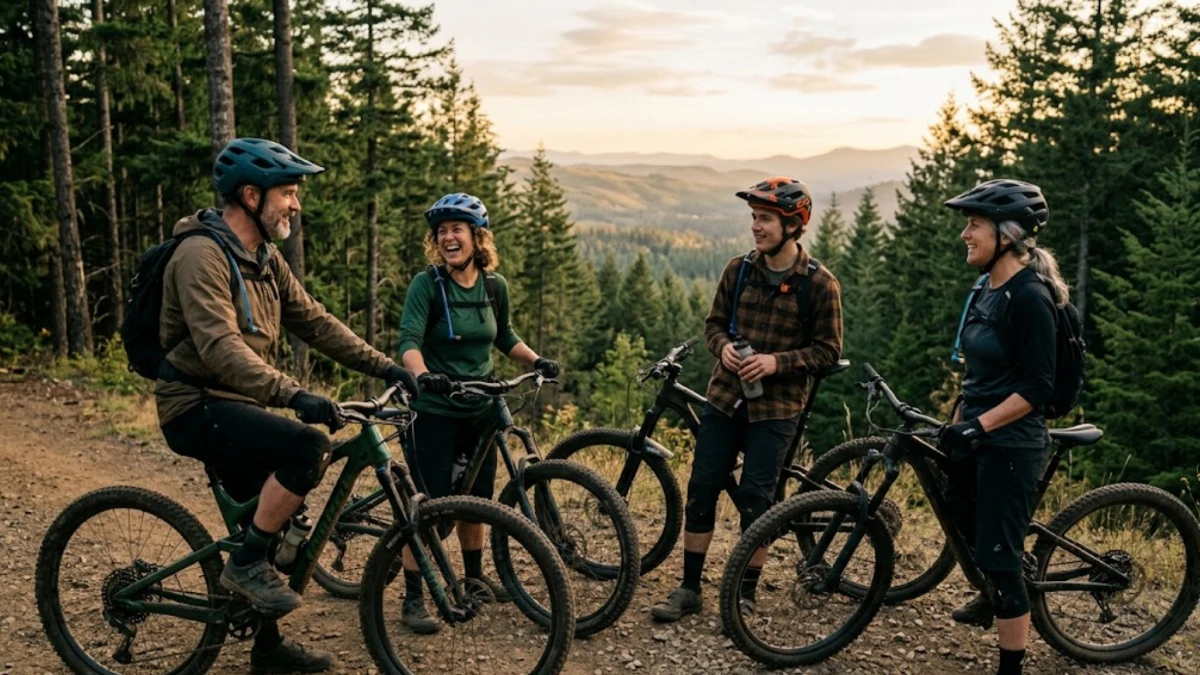
Group rides are where it clicks. You show up not knowing anyone, and two hours later you’ve got a phone full of new contacts and a story about a crash that wasn’t yours to tell. The format has changed a lot over the years too — I cover how casual meet-ups evolved into the structured, skill-graded group rides most towns run now.
And a lot of the time, it’s not a shop or a group ride at all — it’s a coffee counter next to the workshop, where the actual community lives.
Mentorship, Culture Shock, and Bridging Generations
Every experienced rider I know picked up something crucial from someone who’d already been riding for years — a line through a rock garden, how to actually set sag, when to walk a section instead of forcing it. That’s mentorship, and it’s one of the quieter engines that keeps this sport healthy. I’ve written a full guide on how that knowledge actually gets passed down.
Moving to a new trail system, or a new country’s riding scene, comes with its own learning curve — different etiquette norms, different terrain, different unspoken rules. I cover what that transition looks like in practice, because it catches more riders off guard than you’d expect.
There’s also a generational thread running through all of it — riders in their 60s still out there humbling 25-year-olds on the climbs, and younger riders bringing new energy to trail crews and local scenes. I dig into how mountain biking connects those age groups where a lot of other sports don’t.
Giving Back: Trail Advocacy and Trail Building
Trails don’t maintain themselves, and in most places, paid crews don’t build them either. They get built by riders — on weekends, with shovels and rakes, because somebody has to. I go deeper into the advocacy side of this: how riders actually influence which trails stay open, get expanded, or get closed.
Then there’s the build side itself — the actual physical work of shaping a berm or cutting a new line, which I’ve written about as its own thing because it deserves the space.
Underneath both is something a lot of riders don’t think about until they’ve been at it a while: mountain bikers tend to become fairly serious about the land they ride on. I cover that environmental thread separately too — it’s less about politics and more about the practical habits that come from spending that much time outdoors.
A Global, Connected Community
I’ve swapped trail recommendations with riders in three different countries without ever meeting them in person, and that’s fairly normal now. Forums, riding apps, and social groups have turned mountain biking into something you can research from your couch and then go experience on the other side of the planet — I’ve got a piece that gets into how connected this sport has actually become.
That said, a group chat is not a group ride. I also cover the balance between the online side of this hobby and the version that actually happens on dirt, because leaning too hard on one over the other changes the experience in ways that are easy to miss.
Festivals, Races, and Shared Stoke
If you want to see this culture at full volume, go to an event. Festivals bring in brands, pro riders, demo bikes, and a few thousand people who are all there for the same reason — I’ve written a full rundown on what these weekends are actually like beyond the racing itself.
Enduro and downhill race days have their own version of this. The clock says it’s a competition, but stand at any tape section, and you’ll see riders cheering for total strangers. I cover that community layer of racing separately, because it’s easy to miss if all you see are the results sheets.
Underneath most of this is a feeling riders call “the stoke” — that post-ride buzz that’s somehow contagious even to people who weren’t there. I’ve written a full piece trying to actually explain what that is and why it spreads so fast.
A Sport for Everyone
This sport used to skew pretty narrow — mostly one type of rider, on one type of trail. That’s changed a lot, and for the better. I’ve covered the push to get more women riding and building community on their own terms, the work of getting more kids on bikes early, and what it takes to build trails and programs that work for riders of different abilities. Three separate pieces, three separate angles, same underlying shift — the sport getting bigger without losing what made it good in the first place.
Gear, Style, and Self-Expression
Somewhere along the way, gear stopped being purely functional and started being personal too. Paint jobs, frame choices, the way someone sets up their cockpit — it says something about the rider, not just the bike. I’ve got a full breakdown of how that shift happened, from purely practical kit to something closer to personal style.
Some riders take that even further and build their own — I cover the DIY side of the sport, the people welding frames and modifying parts in garages because they wanted something the catalog didn’t sell. And then there’s the flip side of that same instinct: riders restoring old steel-frame bikes to keep a piece of the sport’s history rolling, which I’ve written about as its own thing.
Telling the Story: Media and Storytelling in MTB
Every rider has a story worth telling, even if it’s just about a climb that nearly broke them. I’ve written about why that storytelling instinct runs so deep in this community, and how it shows up everywhere from trailhead conversations to full-blown video edits.
There’s also a soundtrack to all of it — what people listen to on the climb, the podcasts that fill long drives to trailheads. I cover that side of the culture too, because it’s a bigger part of the riding experience than most guides give it credit for.
Riding for the Mind: Mental Health and Well-Being
This is the part that took me longest to actually admit in writing: some of my best rides had nothing to do with fitness or skill progression. They were about getting my head straight. I’m not a therapist, and I’m not going to pretend to be one, but I’ve written a full piece on the mental health side of this sport, because enough riders have told me the same thing for me to take it seriously.
It’s not just anecdotal, either — IMBA has compiled research on the mental well-being benefits tied to mountain biking specifically, not just exercise in general.
The Bigger Picture: Legends, Local Economies, and What’s Next
Every riding town has someone who’s been building trails or organizing rides for longer than anyone can remember — the person a whole local scene sort of orbits around. I’ve written about a few of these riders and trail builders, the ones whose reputation reaches well past their home trails.
There’s a real economic side to this too. Trail towns see it directly — bike shops, breweries, lodging, all of it tied to whether the local trail network is any good. I cover that relationship in more detail, because it’s a big part of why some towns invest so heavily in their trails.
And the sport keeps shifting — new disciplines like dirt jump and slopestyle carving out their own tight-knit scenes within the broader community, and the culture as a whole evolving with e-bikes, new terrain access debates, and a rider base that looks different than it did ten years ago. I’ve got separate pieces on where these specialized scenes came from and where the broader culture seems to be heading next.
It’s Bigger Than the Bike
If there’s one thing I want you to take from this, it’s that the bike is really just the excuse. What keeps people in this sport for years — decades, in a lot of cases — is everything wrapped around it: the people who taught you a line, the crew that shows up to dig, the stranger who waved on a climb, the feeling that you’re part of something that existed before you and will keep going after you.
You don’t need to know all of it on day one. Get a bike, find a trail, say hello to whoever’s out there. The rest tends to follow on its own.