
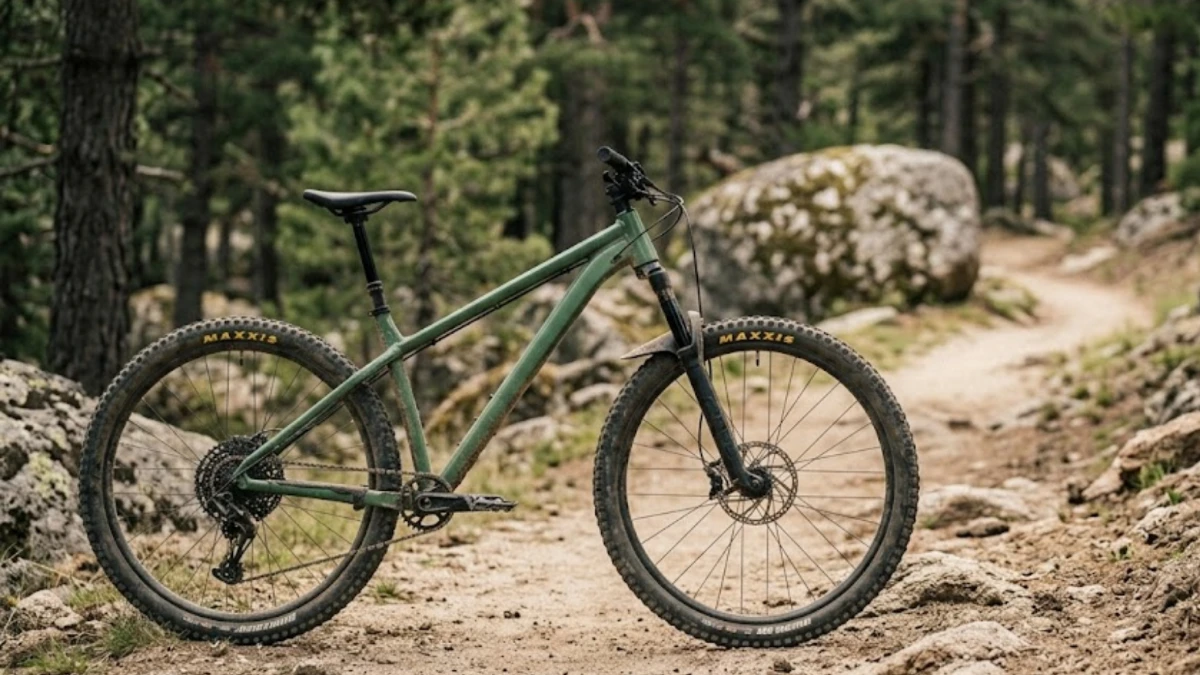
I spent a full season on a bike with geometry numbers I never once looked at, then swapped onto one with a slacker head angle and a longer reach. Same trails, same fitness, completely different bike. That’s geometry doing its job whether you’re paying attention to it or not.
This guide breaks down the measurements that actually shape how a mountain bike rides — head tube angle, reach and stack, seat tube angle, chainstay length, bottom bracket height, and wheelbase. Once you know what each one does, a geometry chart stops being a wall of numbers and starts being useful.
Head Tube Angle: Steering Speed vs. Stability
Head tube angle is the number most riders ask about first, and for good reason — it has the biggest single effect on how a bike steers.
A steeper angle, somewhere around 68–70 degrees, quickens the steering. The bike changes direction with less input, which is great for tight switchbacks and technical climbs where you need to thread the front wheel through a narrow line. A slacker head angle, down around 63–66 degrees, slows steering and makes the bike feel planted at speed. That’s the setup I want under me on a rocky, fast descent — I’d rather the bike track straight and absorb the terrain than dart at every root I clip.
The steering axis angle is technically the angle of the head tube relative to the horizontal, and, along with wheelbase and fork offset, it’s one of the core measurements that determine how a bike handles. On a mountain bike, that translates directly into how confident you feel pointing it downhill versus how quickly you can flick it through switchbacks.
Trail and enduro bikes have been trending slacker for a reason — more of what riders are doing on modern trails is descending-focused, and a bike that feels nervous at speed gets tiring fast. If your riding is mostly XC or you spend a lot of time on tight, twisty singletrack, don’t assume slacker is automatically better for you. It isn’t.
Reach and Stack: Where You Actually Sit
Reach and stack together define your riding position more than any other numbers on the chart, and they’re the two I check first when comparing bikes across brands.
Reach is the horizontal distance from the bottom bracket to the top of the head tube, and according to REI’s mountain bike fit guide, it’s genuinely the best single indicator of how roomy a bike will feel when you’re standing on the pedals. I run a longer-reach frame on my trail bike because I spend most of my ride time out of the saddle, and the extra room lets me get my weight back on steep pitches without feeling cramped.
Stack is the vertical distance from the bottom bracket to the top of the head tube — basically how tall the front end sits. A taller stack puts you more upright, which is easier on your lower back over a long ride. A shorter stack drops you into a more aggressive, weight-forward position that helps on fast descents and hard cornering but gets tiring if you’re out there for hours.
Neither number works in isolation. A bike can have a long reach and a tall stack, or a long reach and a short stack, and they’ll fit and feel completely different. If you’re between sizes, this is the pairing to look at — not just the marketed frame size.
Seat Tube Angle: The Climbing Number
Seat tube angle decides how far forward or back your saddle sits relative to the bottom bracket, and it’s had the biggest jump in the last few years of any number on this list.
A steeper seat tube angle, in the 76–78 degree range, puts you almost directly over the pedals. It’s a noticeably more efficient climbing position — power goes straight down into the cranks instead of getting lost, and the front wheel stays weighted on steep pitches instead of wandering. Older bikes ran slacker seat angles, closer to 73–75 degrees, which feels more relaxed for cruising but works against you the moment the trail points up.
The reason steep seat angles caught on so fast isn’t just climbing efficiency — it’s that modern bikes have longer reach numbers too, and a slack seat angle on a long-reach bike puts the saddle too far behind the bottom bracket for comfortable pedaling. The two numbers had to move together.
Chainstay Length: Playful vs. Planted
Chainstays run from the bottom bracket back to the rear axle, and their length is a straightforward trade-off between agility and stability.
Short chainstays, in the 425–435mm range, make a bike easy to lift, quick to whip around tight corners, and generally more playful underfoot. Longer chainstays, up around 440–455mm, plant the rear wheel and give you better traction on loose climbs, along with more composure at speed. I’ve ridden both ends of that range on the same trail system, and the difference shows up most on steep, loose switchback climbs — the longer-chainstay bike hooks up better.
Bigger wheels tend to push chainstay length up a bit to keep the rear tire from hitting the seat tube, which is part of why taller riders on larger wheels often end up with a more stretched-out, stable riding position compared to smaller frames.
Bottom Bracket Height: Cornering Grip vs. Pedal Clearance
This one’s about where your weight sits relative to the wheels, and how much clearance you’ve got underneath you.
A lower bottom bracket drops your center of gravity, which makes a bike feel more locked-in through corners — you sit in the bike rather than on it. The trade-off is ground clearance. Ride a low-BB bike through a rock garden or a root-choked climb, and you’ll clip pedals more often than you’d like. A higher bottom bracket sacrifices some of that cornering confidence for clearance, which matters a lot on technical, chunky trails.
Most modern trail bikes land somewhere in the middle on purpose. If you ride mostly flowy terrain, err on the lower side. If your trails are rocky and technical, a bit more clearance saves you from a lot of stubbed pedals.
Wheelbase: The Sum of Everything
Wheelbase is simply the distance between the front and rear axles, and it’s really a byproduct of every other number above — head angle, reach, chainstay length, and fork offset all feed into it.
A shorter wheelbase feels nimble and easy to place through tight trees or switchbacks. A longer wheelbase helps a bike track straighter and feel more stable at speed, which is why enduro and downhill bikes have been getting longer for years. It’s not a number you’d choose in isolation — it’s more of a signal for how a bike will feel once everything else is accounted for.
How It All Comes Together
None of these numbers tells the whole story on its own. A bike with a slack head angle, long reach, long chainstays, and a low bottom bracket is going to feel like a descending machine. A bike with a steeper head angle, shorter reach, and shorter chainstays will feel quick and eager on flatter, twistier trails. That’s the “personality” a geometry chart is really describing.
Component choices layer on top of this, too. Swapping wheel sizes or upgrading your mountain bike wheels can change how a bike feels, even when the frame geometry hasn’t changed, and understanding how wheel size affects the ride is worth it before you assume a fit problem is a frame problem. The material the frame itself is built from also plays into how that geometry translates to actual trail feel — a stiffer frame telegraphs the numbers more directly than a more compliant one.
If you’re weighing a hardtail against full suspension, geometry is part of that decision too — our full breakdown of hardtail vs. full suspension goes into how suspension design and geometry work together. And if this is your first time digging into frame specs, our main guide to mountain bike components is the place to start before you get into individual parts.
Riding It Is Still the Real Test
You don’t need to memorize every degree and millimeter here. What’s worth carrying with you is the feel each number points toward — slack and low means stable and descent-oriented, steep and short means quick and climb-friendly, and reach and stack together define whether the bike actually fits you.
None of that replaces a test ride. I’ve been surprised more than once by a bike that looked perfect on paper and felt off on the trail, usually because suspension tuning or component spec changed the equation. Numbers get you close. Time in the saddle gets you the rest of the way.