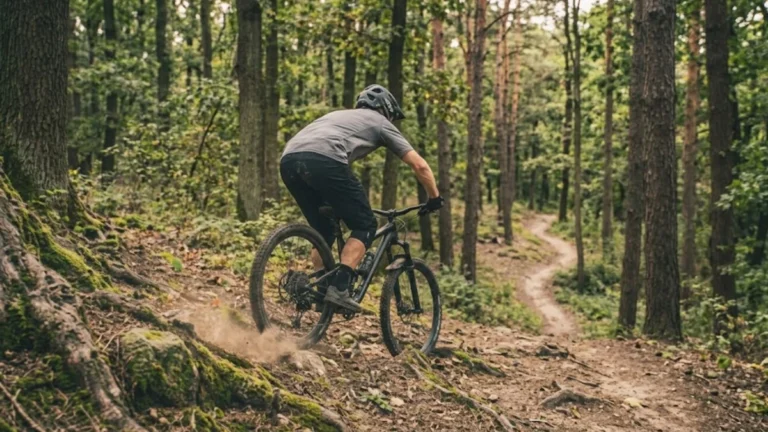

I ran the stock wheelset that came on my hardtail for almost two full seasons before I finally swapped it out — and the difference showed up on the very first climb, not just on the fast stuff. Wheels are the one component that’s always in motion, which is exactly why they change how a bike feels more than almost anything else you can bolt on.
If you’re weighing an upgrade, the decision really comes down to four things: rim material, rotational weight, hub quality, and making sure the spacing actually matches your frame. Here’s how I think through each one, as part of our full breakdown of every part on the bike.
Rim Material: Aluminum vs. Carbon
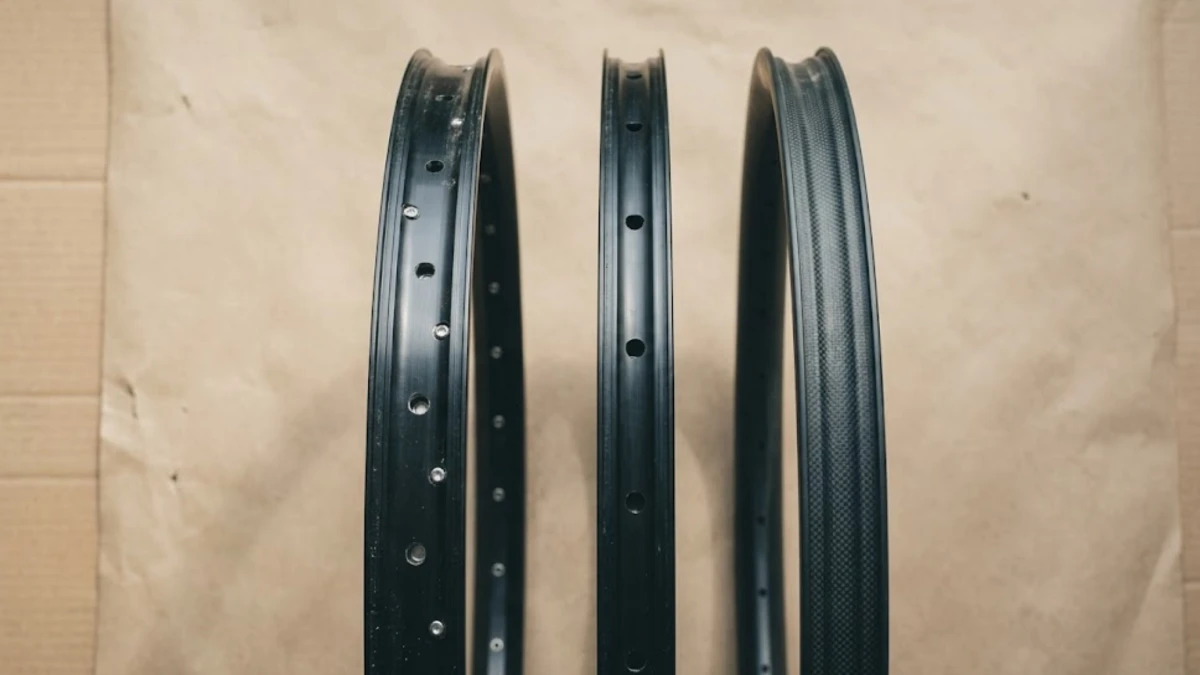
Aluminum is still the default for good reason. It’s affordable, it takes a hit without shattering, and a decent shop can often true out a ding rather than write the wheel off. The trade-off is weight — aluminum rims carry more mass than carbon, and on a wheel, weight matters more than it does almost anywhere else on the bike.
Carbon rims are lighter and noticeably stiffer, which translates to sharper handling through chatter and hard cornering. They cost more, and they fail differently — a big enough impact can crack a carbon rim rather than bend it, and repair isn’t a quick shop job. This is the same trade-off I walked through in our frame materials guide: durability and cost on one side, weight and precision on the other, and neither answer is wrong depending on how you ride.
For most riders doing a first wheel upgrade, a well-built aluminum wheelset with a good hub is the smarter money. Carbon earns its price tag once you’re chasing marginal gains or you’re hard enough on your bike that the stiffness actually changes how it handles.
Rotational Weight: Why Wheel Weight Matters More Than Frame Weight
Weight that spins costs more energy to move than weight that sits there. That’s why shaving grams off your wheels — and the tire, tube, and cassette that spin with them — makes a bigger difference to how a bike accelerates and climbs than the same weight saved off the frame. That’s why lighter wheels are usually the first upgrade worth prioritizing over something like a lighter stem or handlebar.
In practice, that means a lighter rim and a lighter tire will make your bike feel quicker off the mark, easier to haul up a climb, and more willing to change direction — even if the total weight saved is modest compared to swapping other parts.
Wheel Size and Hub Spacing: Get These Two Things Right First
Your frame and fork are built around a specific wheel diameter — almost always 27.5-inch or 29-inch — so this isn’t really a choice you make at upgrade time; we cover the size decision itself in more depth here if you’re still deciding between the two.
What you do need to check carefully is hub spacing. Most current bikes use “Boost” spacing — 110mm up front, 148mm out back — which widens the hub flanges compared to the older 100mm/142mm standard. SRAM introduced Boost to spread the spoke flanges farther apart, improving the spoke bracing angle and giving the wheel more lateral stiffness without adding weight. Mixing Boost and non-Boost parts without an adapter isn’t a small mismatch—it simply won’t fit —so confirm your frame and fork spacing before you buy anything.
Hubs: Where the Real Upgrade Happens
The hub does more for how a wheel feels than its size suggests. Two things matter most: engagement and bearings.
Engagement is how quickly the hub transfers power once you start pedaling again after coasting. A low-engagement hub has a noticeable dead spot; a high-engagement one picks up power almost instantly, which you feel most on technical, stop-start climbs where you’re repositioning the pedals mid-move. Bearings matter too — sealed cartridge bearings shrug off dirt and water and need far less maintenance than older loose-ball setups. Engagement, bearings, and freehub compatibility get their own deep dive if you want the full picture before choosing a hub.
Spokes: Worth a Second Look Once You’re Riding Aggressively
Most mountain bike wheels run 28 or 32 spokes. More spokes generally means a stronger, heavier wheel; fewer means lighter but less forgiving under hard use. Unless you’re building a custom wheel from scratch, spoke count and lacing patterns are worth their own read rather than something to obsess over here — the short version is: don’t ignore loose or wobbly spokes, since a wheel with uneven tension will fail faster than one that’s properly built and tensioned.
Tubeless Compatibility Isn’t Optional Anymore
If a new wheelset isn’t tubeless ready, I’d walk away. Running tubeless lets you drop tire pressure for better traction and a smoother ride without the pinch-flat risk that comes with tubes, and REI’s own wheel-buying guide backs this up as one of the clearest reasons tubeless has become the default for mountain bikes. It also strips out the rotational weight of a tube, which stacks on top of everything else a lighter wheel already does. For the full picture on sealant, setup, and when tubes still make sense, see the full tubeless vs. tubed breakdown.
Matching Wheels to How You Actually Ride
- Cross-country / light trail: prioritize weight. A lighter aluminum or entry carbon wheel with a high-engagement hub pays off on every climb.
- All-mountain / enduro: balance matters most. You want stiffness and durability without giving up too much weight — this is where a well-built aluminum wheel or a durable carbon option earns its keep.
- Downhill / bike park: strength wins over everything else. Heavier-duty rims, more spokes, and hubs built to take repeated hard hits are the priority; weight is secondary.
Picking the right tire matters just as much as the wheel under it, so don’t treat the wheelset decision in isolation from what you’re mounting on it.
Budget: What You’re Actually Paying For
- Entry-level (roughly $500–700): solid aluminum rims, sealed bearings, and a decent hub — a real step up from stock wheels.
- Mid-range (roughly $700–1,500): better hubs with higher engagement, sometimes entry-level carbon — the sweet spot for most riders.
- High-end ($1,500+): the lightest carbon rims paired with premium hubs and spokes, built for riders chasing every gram and every bit of stiffness.
A cheaper tubeless-ready wheelset will usually serve you better on the trail than an expensive wheelset you’re still running tubes on.
Talk to Your Shop
Bring your bike, your budget, and where you actually ride to a shop that knows what they’re doing. They’ll confirm spacing, match a wheelset to your riding style, and set it up tubeless correctly — which matters more than any spec sheet.
A wheel upgrade is one of the few changes that touches how a bike accelerates, climbs, corners, and rolls, all at once. Get the material, weight, and hub right for how you actually ride, and everything else on the bike starts to feel sharper too.