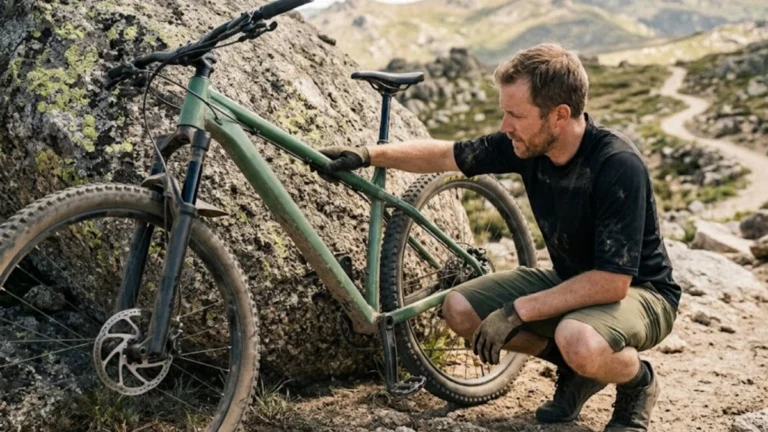

I once spent an entire Saturday morning at a shop trying to figure out why a “compatible” wheel upgrade didn’t fit my frame. Turned out my hardtail was still running the old 142mm standard, and the wheel I’d bought was Boost—same axle diameter, three millimeters off on each side, completely useless to me that day.
That mix-up is common enough that it’s worth understanding properly. This guide covers what a hub actually does, why Boost and Non-Boost spacing exist, and why engagement — a spec most riders never think about — can change how your bike feels on technical terrain. For the bigger picture on how hubs fit into the rest of your build, our main guide to mountain bike components is the place to start.
What a Hub Actually Does
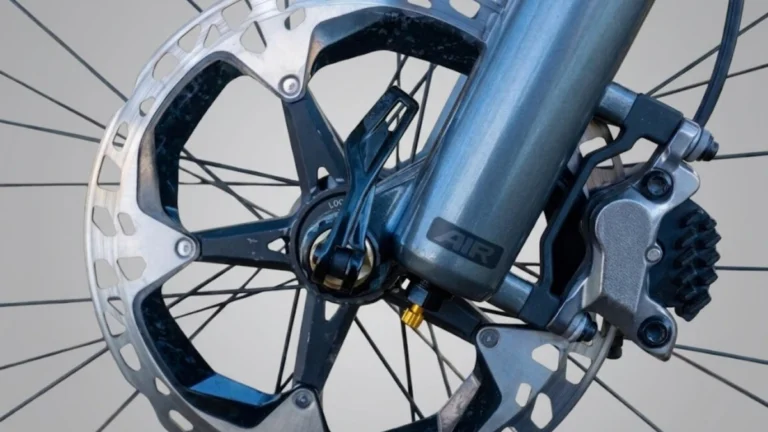
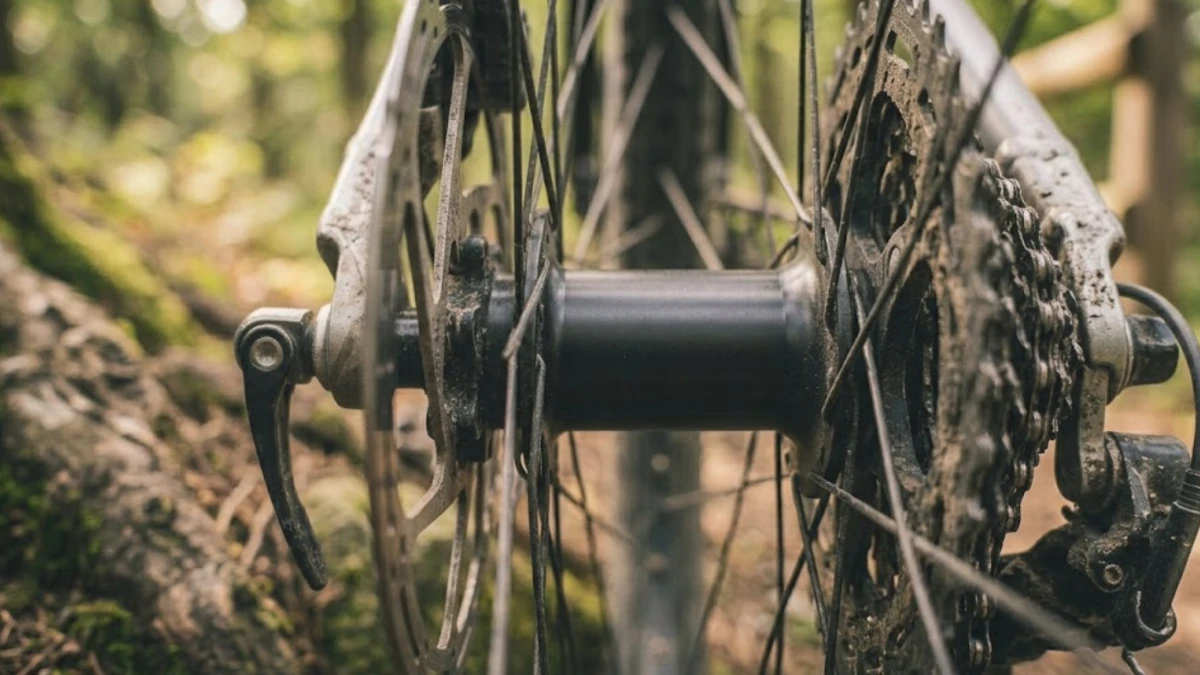
A hub is the center of your wheel — the cylinder the spokes attach to, spinning on a set of sealed bearings. Front and rear hubs share that basic job, but the rear one does more work. It also houses the freehub, the mechanism that connects your drivetrain to the wheel so pedaling power actually moves you forward, and lets the wheel keep spinning freely when you stop pedaling.
Get the bearings and freehub right, and you barely notice the hub. Get them wrong — worn out, poorly sealed, mismatched to your frame — and every ride reminds you.
Boost vs. Non-Boost: Why Hub Width Matters
Hub width isn’t a preference; it’s a compatibility spec. Your frame and fork are built around a fixed measurement between the dropouts, and your hub has to match it exactly.
Non-Boost was the standard for most of mountain biking’s modern history: 100mm up front, 142mm in the rear (135mm on older bikes). It’s still perfectly functional, and there’s nothing wrong with running it if that’s what your bike takes.
Boost widened that spacing — 110mm front, 148mm rear — and it’s what nearly every new mountain bike ships with today. Trek introduced the 148mm rear standard on its 2015 Remedy 29 line, working with SRAM, aiming to solve a stiffness problem that came with the industry’s move toward bigger 29in wheels. As BikeRadar reported at the time, wider spacing increased the distance between hub flanges, and that was the primary way to make 29er wheels as stiff as their 27.5in counterparts. That’s directly tied to the shift to bigger 29er wheels that was reshaping trail and enduro bikes around the same period.
The mechanism is straightforward once you see it: pushing the flanges further apart increases the angle the spokes make between hub and rim. A steeper bracing angle resists lateral flex better, which is how spoke bracing angle affects wheel strength in more technical terms. Boost also opened up clearance for wider tires and shifted the chainline outward slightly, which matters when you’re dialing in your chainline on a 1x drivetrain.
None of this makes Non-Boost obsolete. It means Boost offers a real, measurable advantage for riders pushing bigger wheels and wider tires harder — not a mandatory upgrade for everyone.
You cannot mix standards.
Boost and Non-Boost hubs are not interchangeable. A 148mm rear hub will not fit into a 142mm frame, and vice versa, without adapters — and adapter kits that convert 142 to 148 exist, but nothing converts a Boost hub down to fit a narrower Non-Boost frame. Before buying wheels, a new fork, or a used frame, check the spec sheet or measure your current dropout spacing yourself. It’s the single most common compatibility mistake I see riders make when upgrading.
Hub Engagement: How Fast Your Power Hits the Wheel
Engagement is a spec that doesn’t show up on a wheel until you’re actually riding technical terrain, and then you notice it immediately.
Inside most rear hubs, spring-loaded pawls click against a toothed ring to transfer pedaling force to the wheel, then release when you coast — that’s the clicking sound freewheeling hubs make. The number of points where those pawls can catch is called the points of engagement (POE), and it determines how much the pedals rotate before power actually reaches the wheel. Some hubs use a ratchet system instead of pawls, but the principle is the same: fewer engagement points mean more rotational “dead spot” before the wheel responds.
DT Swiss defines the resulting engagement angle as 360 degrees divided by the number of engagement points — a hub with 36 points engages roughly every 10 degrees of pedal rotation. In comparison, a hub with 108 points engages roughly every 3.3 degrees. That gap is what riders feel as “instant” versus “laggy” power delivery.
How much engagement do you actually need?
Budget and mid-range hubs typically sit in the 18–36 point range, which is fine for most trail riding and how the cassette and freehub work together on a standard build. High-engagement hubs push past 100 points and cost noticeably more.
Where it actually matters: technical climbing where you’re stopping and restarting the power stroke over roots and rocks, punchy accelerations out of corners, and track-standing through slow, awkward sections. On smoother trails or long XC days, I’ve genuinely never noticed the difference between a 36-point hub and a higher-end one. If your riding is mostly climbs and flow trails, spend the money elsewhere first — engagement is a real upgrade, but a specific one, not a universal must-have.
Choosing or Upgrading Your Hubs
If you’re building a wheel from scratch or replacing a hub, spacing compatibility comes first, engagement second, and everything else — weight, bearing type, brand reputation for rebuildability — after that. Confirm axle spacing and thru-axle diameter against your frame and fork before anything else, then decide how much you’re willing to pay for faster engagement based on the terrain you actually ride. If you’re shopping for a full wheel upgrade rather than just a hub, What to Check Before Buying New Wheels walks through the rest of the compatibility checklist, from rim width to brake rotor sizing.
Common Questions
Can I convert a Non-Boost hub to Boost? Not really — adapter kits move a 142mm hub out to 148mm, but there’s no reliable way to narrow a Boost hub down to Non-Boost spacing. If your frame is Non-Boost, buy Non-Boost wheels.
Does higher engagement wear out faster? Not inherently, though systems with more pawls have more moving parts that can eventually need service. Ratchet-style systems tend to be simpler to rebuild than high-pawl-count designs.
Is Boost worth upgrading to on an older bike? Only if you’re also replacing the frame or fork, since Boost requires matching spacing throughout. Swapping just the wheels on an otherwise Non-Boost bike isn’t possible without adapters that most riders should skip.
Hub specs aren’t glamorous, but they’re the kind of detail that either disappears completely into a good ride or turns into an afternoon of returns and adapter kits. Check the spacing before you buy, decide on engagement based on how you actually ride, and the rest takes care of itself.