
I rode a rocky, switchbacking descent outside Marrakech years ago with my seat still jacked up at climbing height, because I hadn’t bothered to stop and drop it. I ate dirt about a third of the way down. That’s the short version of why I trust a dropper post more than almost any other upgrade on my bike.
This piece breaks down what a dropper actually does, why seat height matters more than most riders assume, and what to look for if you’re adding one to your own setup. For how this component fits into everything else on your bike, our main guide to mountain bike components covers the bigger picture.
What a Dropper Post Actually Does
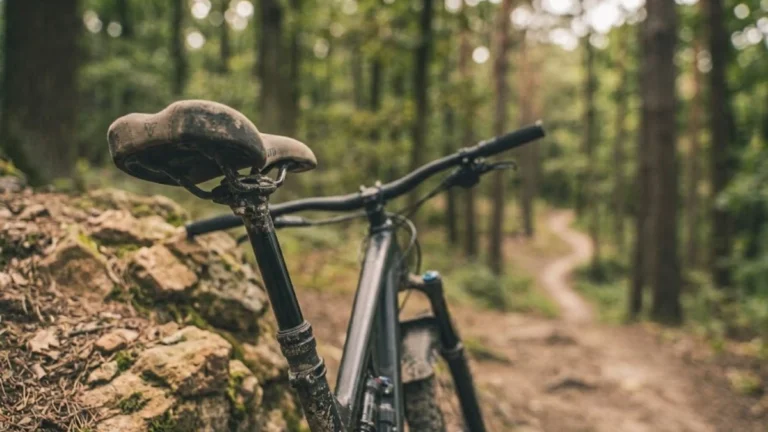
Strip away the marketing language and a dropper post is just a telescoping seat post with a locking cartridge inside. Press the remote lever on your bars, the lock disengages, and your body weight pushes the post down into the frame. Let off the lever again and, depending on the design, the post either holds wherever you stopped it or springs back to full height once you unweight the saddle. Most posts on the market run on what Wikipedia’s entry on dropper seatposts describes as a hydraulically damped air or coil spring, actuated by cable, hydraulic line, or electronics — which is a technical way of saying the movement feels controlled rather than like the seat just falling out from under you.
I ran cable-actuated posts for years before switching to a hydraulic one two seasons back. The difference on the trail is smaller than people expect — both work, both eventually need service — but the hydraulic post has a noticeably crisper return and less cable drag in cold weather.
Why Seat Height Matters More Than People Think
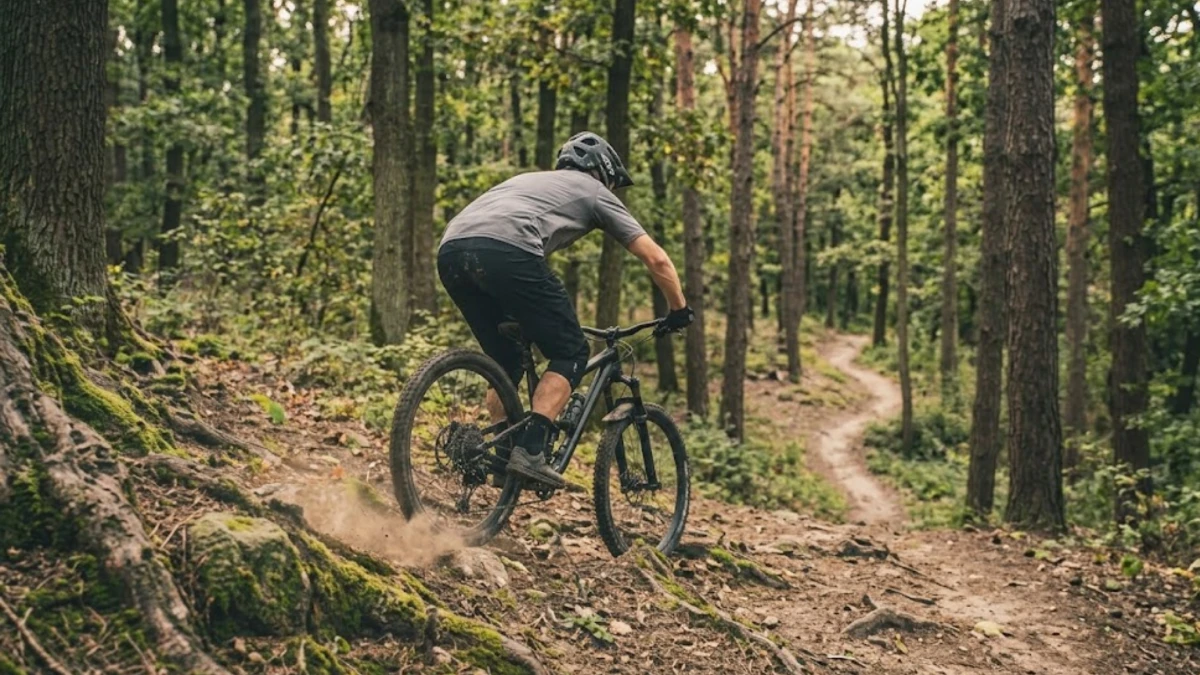
Nobody thinks about saddle height on a fire road. On technical singletrack it’s a different story entirely. A saddle at climbing height on a steep, rough descent gets in the way of exactly the movement you need — shifting your hips back, absorbing hits with your legs, getting your weight low and centered over the bike. I’ve watched newer riders get bucked forward on drops they were physically capable of riding clean, purely because the seat was pinning their hips too far forward and too high.
Drop the post, and that restriction disappears. You get room to move your body independently of the bike, which matters whether you’re running a hardtail or full-suspension rig — a hardtail especially, since you’re relying on your legs to do suspension duty that the rear shock isn’t providing. More room to move means faster reactions to the stuff the trail throws at you without warning: an off-camber root, a sudden compression, a line change you didn’t plan for.
The Payoff Going Uphill
The flip side gets less attention, but it’s just as real. On a long climb, a saddle that’s even a couple centimeters low costs you pedaling efficiency — your legs can’t fully extend, so you’re pushing with a shortened stroke instead of full leg drive. Slam the post back up before a climb, and you get your proper pedaling height instantly, no stopping, no guessing at the mark you scratched onto the post years ago. It’s also why droppers showed up on cross-country race bikes eventually, not just enduro and downhill rigs — climbing efficiency and descending control used to be a trade-off, and now they’re not.
Riding Without Stopping
Before droppers were standard, the ritual on a mixed-terrain ride was predictable: stop at the top, unclamp, drop the post, remember to tighten it back down properly, drop in. Stop at the bottom, repeat the whole process in reverse for the next climb. It broke up momentum, and it broke up the ride.
With a dropper, that ritual is gone. Tap the lever on the way into a descent, tap it again as the trail kicks back up. You keep your rhythm on rolling terrain that mixes climbs and descents in the same run — which, on most trail systems, is most of the riding you actually do.
Picking Drop Amount and Actuation Type
Travel length is the first real decision, and it’s discipline-dependent rather than one-size-fits-all. XC and shorter-travel trail bikes typically run 100–150mm of drop, which is enough clearance without eating too much of a shorter seat tube. Enduro and downhill-oriented bikes commonly run 150–200mm, with some long-travel options now pushing well past that. The right number depends on your frame’s seat tube length and your leg length, not just what’s trending — and for how seat tube length factors into frame design, our geometry guide is worth a read before you buy.
Insertion length is the detail people skip and then regret. Every post needs a minimum amount of shaft inside the frame to stay secure, and that minimum varies by brand and model even at the same stated travel. A buyer’s guide from evo walks through measuring your available insertion depth before ordering, which is worth doing rather than guessing — sending back a post that’s too long for your frame is a hassle nobody enjoys. Beyond travel and insertion, you’re choosing between internal or external cable routing (internal looks cleaner and is standard on most modern frames), and cable-actuated, hydraulic, or wireless remotes, with wireless commanding a real price premium for genuinely cleaner setup. For the full rundown of seatpost types beyond just droppers — fixed, suspension, and dropper options side by side — that’s covered in its own piece.
Worth the Upgrade
If I had to pick one component upgrade that changes how a bike rides more than its price tag suggests, it’s a dropper post. It doesn’t make you faster in a straight line, and it doesn’t show up on a spec sheet the way a fancier fork does. Still, it changes your relationship with technical terrain almost immediately — more control going down, full power going up, and no stopping to fuss with a lever clamp in between. That’s why it’s become close to standard equipment on trail-oriented bikes rather than a niche upgrade for gravity riders.
If you’re building up a bike or retrofitting an older frame that never had one, it’s worth prioritizing over most other component swaps on your list.