
I ran a hardtail for three seasons before I ever threw a leg over a full-suspension bike, and the switch completely changed how I read a trail. That’s really what this decision comes down to — not which bike is “better,” but which one matches how and where you actually ride.
This guide breaks down the real differences in feel, cost, and capability, and covers our main guide to mountain bike components if you want the fuller picture before you commit.
What Makes a Hardtail a Hardtail
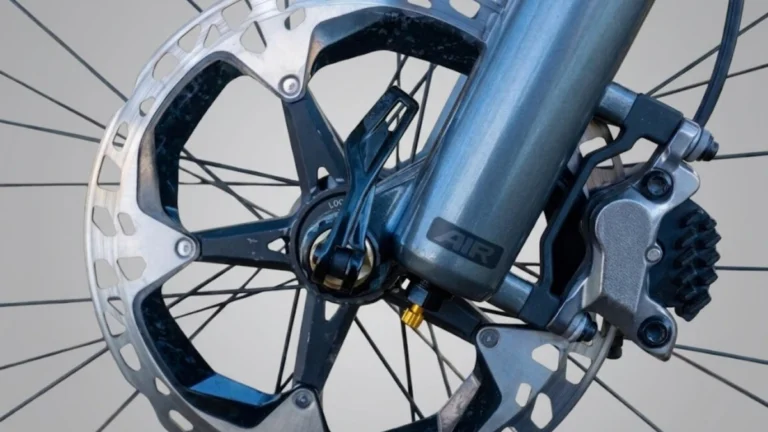
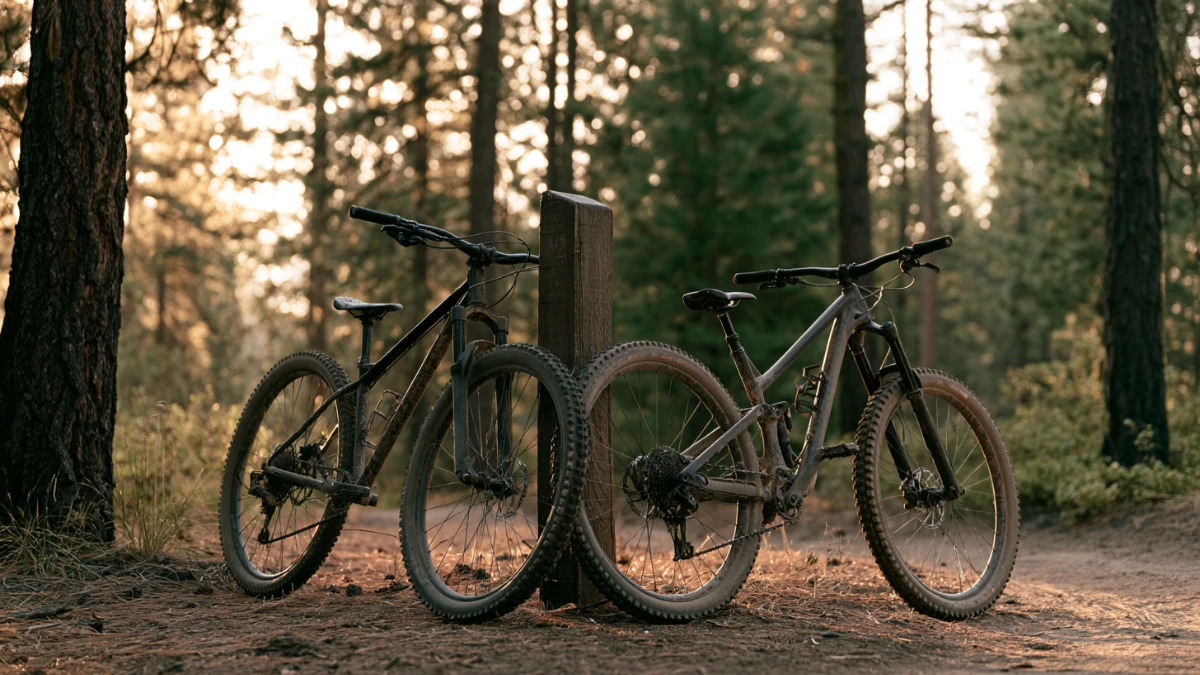
A hardtail runs a suspension fork up front and a rigid rear triangle — no shock, no pivots, no moving parts behind the seat. Everything you put into the pedals goes straight to the rear wheel with nothing soaking it up along the way.
That simplicity is the whole appeal. Fewer parts means less to maintain, less weight to haul uphill, and a lower price for the same component spec. It also means the trail talks to you more directly — every root and rock comes through the frame, which forces you to actually read the terrain instead of letting the bike smooth it over.
What Makes Full Suspension Different
Full suspension adds a rear shock and a linkage system that lets the back wheel move independently of the frame. Both wheels can now track the ground over rough terrain rather than skip across it.
The tradeoff is complexity. More pivots means more service intervals, and the added hardware adds weight the frame has to carry — something that becomes more noticeable the longer and steeper your climbs get.
Where Hardtails Win
Climbing efficiency. With no rear shock to compress under pedal load, more of your effort translates directly into forward motion. On smooth-to-moderate climbs, that efficiency is hard to argue with.
Skill development. Riding a hardtail on technical terrain teaches you to pick lines deliberately, since your body has to do the job the rear shock would otherwise handle. Riders who spend a season on a hardtail tend to carry that line-reading instinct with them for good, even after they move to full suspension.
Lower cost, better parts per dollar. Because the frame is simpler to manufacture, a hardtail at a given price point usually comes with a better drivetrain, brakes, and wheels than a full suspension bike in the same range.
Lower maintenance. No shock bushings, no linkage bearings, no rear pivots to grease. It’s the fork and not much else.
Where Full Suspension Wins
Traction and control on rough ground. As REI Co-op explains, the type of suspension a bike uses directly shapes its control, traction, and comfort — a full-suspension setup manages impacts through both the fork and rear shock, while a hardtail’s rigid rear end can’t absorb them. That rear-wheel contact matters most exactly where it counts — braking into a rock garden, or powering out of a rutted corner.
Comfort over long days. Suspension travel absorbs the small, constant chatter that adds up over hours in the saddle. I notice the difference most on rides past the three-hour mark — less fatigue in my hands and lower back by the final descent.
Confidence on technical or aggressive terrain. Bigger drops, rock gardens, and high-speed descents all become more manageable with a rear shock that keeps the bike planted. This is where enduro and downhill riders live, and it’s not really a category hardtails were built to compete in.
Cost, Weight, and Maintenance Tradeoffs
The honest version of this comparison isn’t close on price. Trek’s own buyer’s guide sums up hardtails as more efficient while pedaling, faster on climbs and smooth trails, and lighter overall. At the same time, full-suspension bikes trade some of that efficiency for greater capability and stability on rough, technical terrain. That tradeoff — efficiency and cost versus capability and comfort — is really the entire decision in one sentence.
Weight follows the same logic: fewer parts means less mass, and that shows up most on sustained climbs. Modern full suspension frames have gotten lighter, but a hardtail at the same price point will still almost always weigh less.
Maintenance scales with complexity too. A hardtail needs fork service and the usual drivetrain upkeep. A full suspension bike adds shock service, pivot bearing checks, and occasional linkage hardware replacement — not a huge burden, but a real one if you’re doing your own wrenching.
Matching the Bike to Your Trails and Goals
Go hardtail if you’re new to the sport, ride mostly flowy or moderately technical trails, watch your budget, or want to build fundamental skills before adding suspension complexity. It’s also the more honest choice if most of your riding is cross-country style — long days, sustained climbs, efficiency over cushion.
Go full suspension if your local trails run rocky, rooty, or steep, if you’re logging long days where fatigue adds up, or if you’re pushing into enduro or aggressive trail riding where confidence on descents matters more than pedaling efficiency. Budget matters here too — a full-suspension bike at a low price point often means compromised components to hit that price, so it’s worth stretching for the next tier up if you can.
Geometry plays into this as much as suspension does — how geometry shapes handling on either bike can matter just as much as travel numbers when you’re comparing two bikes side by side.
My Take After Riding Both
I still reach for a hardtail on trail days when I want that direct, unfiltered connection to what’s under the tires — it keeps my line choice honest. But on anything technical, or anywhere I’m out for four-plus hours, full suspension wins every time. Neither bike is the “correct” answer. The right one is whichever matches the terrain you actually ride most weekends, not the terrain you’re hoping to ride someday.
If you’re still deciding, don’t skip the test ride. Get on both at your local shop, even if it’s just around the parking lot — the difference in feel tells you more in five minutes than any spec sheet will. Once you’ve settled on a frame type, the next decisions — fork travel and sag setup, rear shock tuning, and eventually frame protection — start to fall into place.