
I once dropped into a fire-road descent I’d ridden a dozen times, except this time I’d swapped in some worn-out 160mm rotors I’d forgotten to replace. By the bottom, my levers were coming back to the bar and my hands were shaking from over-gripping. That’s the day I stopped treating rotors as an afterthought.
Brake rotors don’t get the attention forks and drivetrains do, but they’re doing the actual work of stopping you. Get the size, material, or mounting standard wrong for how you ride, and no amount of expensive caliper or lever upgrade will fix it. This piece breaks down what rotors are made of, how size affects performance, and how to match them to your riding — part of our main guide to mountain bike components.
What a Brake Rotor Actually Does
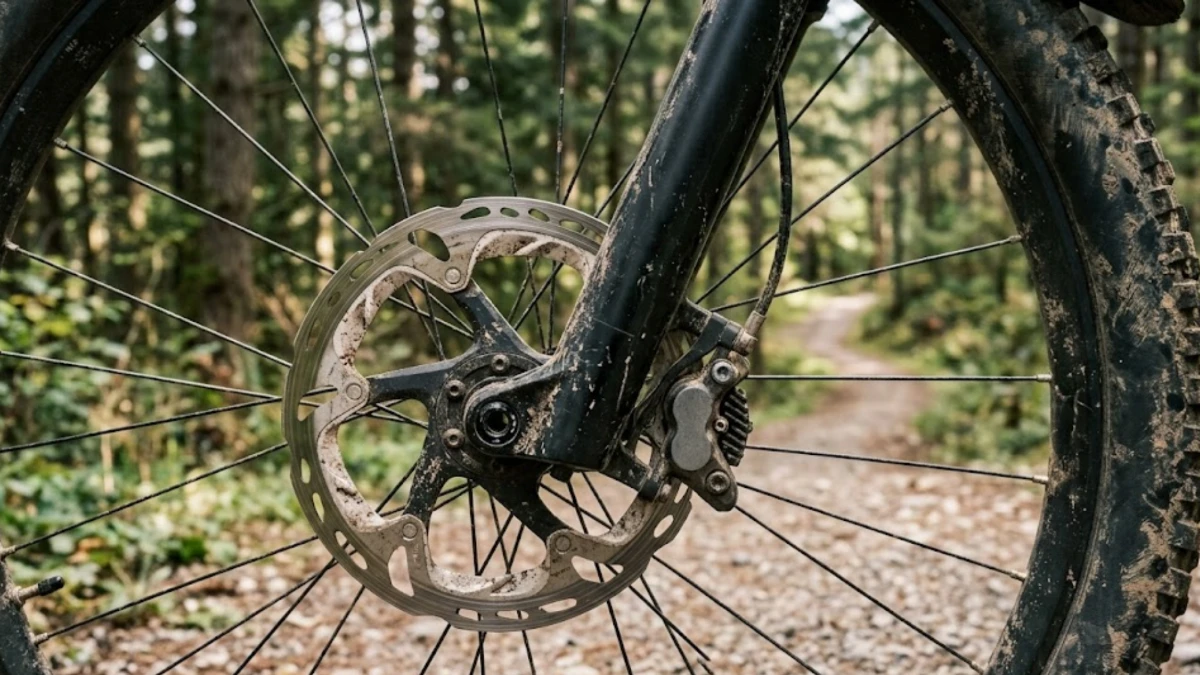
Squeeze your brake lever and the caliper clamps a pair of pads against the rotor — the metal disc bolted to your hub. That clamping force creates friction, the friction converts your speed into heat, and the rotor’s job is to handle that heat without warping, fading, or losing bite. It’s a simple mechanism doing a demanding job, especially on a long alpine descent where you’re on the brakes for minutes at a time rather than seconds.
None of this matters much if you haven’t sorted out how to pick the right brake system for your bike in the first place — rotors are only one half of the equation, and the caliper and pad compound you’re running shape how much a rotor upgrade will actually do for you.
Rotor Materials: Stainless Steel and Two-Piece Designs
Nearly every mountain bike rotor uses a stainless steel braking surface. It resists corrosion, holds up to repeated heat cycles, and gives predictable bite with sintered or organic pads. For most trail riders, a solid stainless rotor is genuinely all you need — I ran nothing else for years.
Where it gets interesting is two-piece rotors: a steel braking ring riveted or bolted to an aluminum carrier (sometimes called a “spider”). Aluminum sheds heat faster than steel and shaves grams off the wheel’s rotating mass, which matters more than static weight because it’s easier to accelerate and decelerate. The tradeoff is cost—two-piece rotors typically cost more than a comparable one-piece stainless disc. I’d only point a casual trail rider toward them if they’re regularly cooking rotors on long descents; for shorter rides and moderate terrain, the upgrade is hard to feel.
Why Rotors Have Holes and Wavy Edges
Those cutouts and wavy profiles aren’t just for looks. They pull double duty: more edge surface area helps the rotor shed heat faster, and the gaps clear mud and water away from the pad contact area. As a result, braking stays consistent when trails get sloppy. Some higher-end rotors add cooling fins or laminated construction to manage heat on sustained descents—tech that trickles down from downhill racing, where riders brake hard enough to discolor a rotor in a single run.
Rotor Sizes and What They Mean for Your Riding
Rotor diameter, measured in millimeters, is the single biggest lever you have over braking power. A larger rotor gives the caliper more leverage against the wheel — the same principle as a longer wrench needing less force to turn a stubborn bolt — and it has more surface area to dump heat into. Common mountain bike sizes run 160mm, 180mm, 200mm (sometimes listed as 203mm depending on the brand), and 220mm.
The right size for you comes down to the maximum diameter your frame and fork can accept, your weight, and how you ride. As a rough starting point: XC riders and lighter, weight-conscious builds tend to run 160mm or 180mm. Trail riders often land on 180mm as an all-rounder, sometimes stepping up to 200mm up front for extra margin. Enduro and all-mountain riders are usually on 200mm front with 180-200mm rear. Downhill, bike park laps, and e-bikes — which are heavier and often ridden faster — commonly run 200mm to 220mm front and rear.
It’s also worth remembering that a bigger wheel already changes how much leverage your brakes have at the rim, so the same rotor can feel more powerful on a 29er than it does on a 27.5-inch wheel. Fork and frame specs set a hard ceiling here too — check the maximum rotor size stamped or listed on your fork before you buy anything bigger than what’s currently mounted.
Front vs. Rear Rotor Sizing
Running a larger rotor up front than in the rear is standard practice, not an accident of spec sheets. Weight shifts forward under hard braking, so the front wheel carries most of the stopping load and generates most of the heat. A common enduro setup is 200mm front, 180mm rear — plenty of power where it’s needed, with a small weight saving out back. I’ve run mismatched sizes like this on every bike I’ve owned since my first proper trail build, and it’s rarely worth going symmetrical unless you’re deep into downhill or bike park riding where the rear does more work than usual.
6-Bolt vs. Centerlock: Mounting Standards
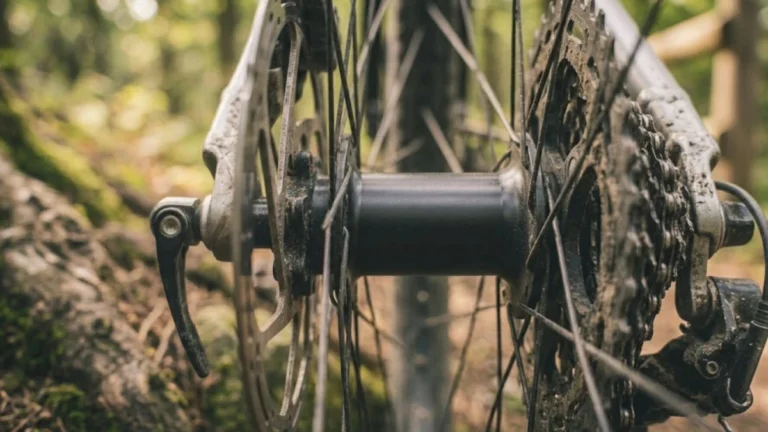
Two mounting systems dominate the mountain bike world. The 6-bolt standard is exactly what it sounds like — six bolts secure the rotor to the hub flange. It’s the more universal option and the easiest to source aftermarket rotors for. Centerlock, common on Shimano wheels but used by other brands too, relies on a splined interface and a single lockring, tightened with a cassette-style tool. It’s SRAM’s own breakdown of the two standards that lays this out clearly if you want to double-check your hub before ordering.
Your rotor has to match your hub’s standard — check your hub’s spacing and mounting standard before ordering a replacement or an upgrade, since adapters between the two exist but add a failure point I’d rather avoid on a bike I’m trusting on a descent.
Matching Rotors to Your Riding Style and Weight
Beyond the discipline guidelines above, two personal factors matter as much as what category of riding you do. Rider weight is the obvious one — more mass means more momentum to shed, so heavier riders should lean toward the larger end of whatever range fits their riding style, regardless of what a lighter riding buddy is running. Terrain matters just as much: if your local trails are mostly rolling and short-descent, you’ll rarely load the brakes hard enough to justify going big. If you’re regularly dropping into sustained descents with long braking zones, undersized rotors will fade on you right when you need them most, and that’s a genuinely unsettling feeling to have mid-trail.
Budget plays in too. A basic stainless rotor in the right size will out-brake an expensive two-piece rotor in the wrong size every time. Get the diameter and front/rear balance right first, then consider material upgrades if you’re still chasing more heat management.
Rotor Care and When to Replace
Rotors are low-maintenance but not maintenance-free. Wipe the braking surface with isopropyl alcohol occasionally to clear off pad residue and road grime, and avoid touching it with bare hands — skin oils contaminate the surface and cause noise or reduced bite. If you’re replacing a rotor, Park Tool’s rotor removal and installation guide is worth a read before you order — matching the new rotor to the same diameter as the old one is the easiest way to avoid also having to swap calipers or adapters.
Watch for a bent rotor, usually noticeable as a rubbing or pulsing sensation at the lever. Minor bends can sometimes be straightened with a rotor truing tool, but if you’re chasing rub and it’s not resolving, the rotor itself—not just alignment—is often the culprit. If you’re getting inconsistent bite point and lever feel that don’t match rotor size, it’s worth ruling out the rotor before you starbleed system or swap swaps.
Getting It Right
There’s no single correct rotor setup — just the right one for your weight, terrain, and how hard you’re willing to push your brakes on the way down. Start with the size guidelines for your discipline, size up if you’re finding fade on your regular trails, and don’t be afraid to run mismatched front and rear sizes. It’s a small, inexpensive change that has an outsized effect on how much control you actually have when it counts.