
I rode flats for three seasons before I ever bolted on a clipless set, and I switched not because someone convinced me flats were wrong. It was because my foot kept bouncing off the pedal on a loose, rocky climb I rode every week, and I got tired of resetting my line mid-effort.
That’s really what this decision comes down to — not which system is “better,” but which one matches how and where you ride. Pedals are a small part of the bike, but they’re the only contact point doing double duty for balance, power, and bailout speed, and they deserve more thought than most riders give them. This piece is part of our full guide to mountain bike components, and it’s worth reading alongside whichever type you’re leaning toward.
Flat Pedals: What They Do Well (and Where They Fall Short)
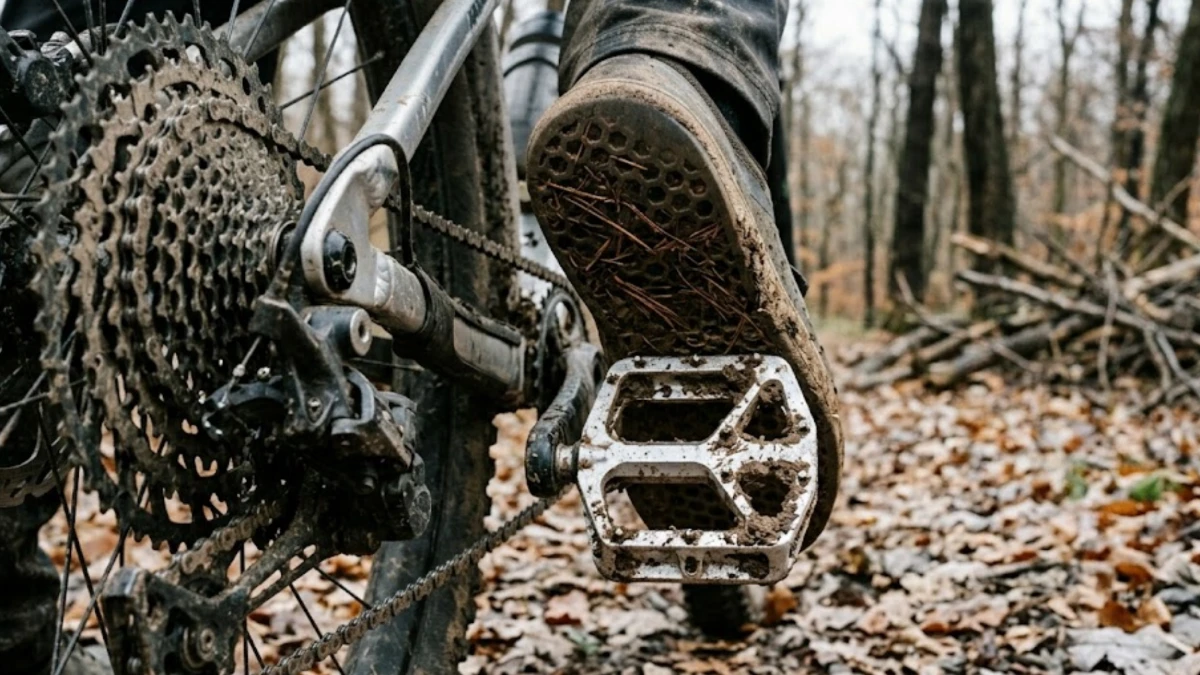
A flat pedal is a wide platform, usually aluminum or nylon composite, studded with small metal pins that bite into the sole of a grippy flat-pedal shoe. There’s no mechanical connection between your foot and the bike — the grip comes entirely from pin bite and shoe rubber, which is a different feeling than most new riders expect. It’s not “loose.” A good flat pedal and a pair of sticky-soled shoes hold a foot in place surprisingly well, right up until you actively lift your foot off.
That’s the entire appeal. You can reposition your foot instantly, dab a foot through an awkward section without unclipping first, and bail cleanly if a line goes wrong. It’s also the setup that teaches you the most about weighting your feet correctly, because there’s no cleat doing any of that work for you — sloppy technique on flats gets punished immediately. That feedback loop builds real skill faster than clipless does. I still run flats on my hardtail for anything technical and steep, and plenty of downhill and freeride riders never leave them, since instant foot separation matters more than pedaling efficiency when the terrain gets that gnarly. I get into that debate in a separate piece, since it’s a bigger conversation than fits here.
The trade-off is efficiency. Because you can only push down through the stroke, not pull through it, long grinding climbs feel a little more one-dimensional on flats, and your foot can still shift or slip off in genuinely rough terrain if your positioning isn’t dialed.
Clipless Pedals: What They Do Well (and Where They Fall Short)
Clipless pedals lock a cleat — a small metal or nylon plate bolted to your shoe’s sole — into a spring-loaded mechanism on the pedal. Step down, feel the click, and you’re connected. To get out, twist your heel outward. Shimano’s SPD system and Crankbrothers’ Eggbeater-style pedals dominate the mountain side of this category. The practical difference between them is mostly feel: SPD cleats sit smaller and more recessed, so walking around off the bike is easier, while Crankbrothers pedals tend to offer more float, letting your foot rotate a few degrees before it releases, which some knees prefer.
Being locked in changes your pedal stroke. You’re pulling as well as pushing, which recruits more of your leg through the full rotation and makes a real difference on sustained climbs or when you need to put down power fast. It also keeps your foot exactly where you placed it, so on fast, rough descents your feet aren’t relocating themselves over every root and rock — the bike tracks more predictably as an extension of your body rather than something your feet are renegotiating with every bump.
The catch is the learning curve. Everyone who’s run clipless has a story about tipping over at a dead stop because they forgot they were attached — it’s an awkward, slow-motion fall more than a dangerous one, but it rattles people the first few times. And even with a recessed cleat, walking in clipless shoes is never quite as natural as walking in a flat-soled shoe.
Matching Pedals to Your Riding Style
This is where the decision actually gets made, and it has less to do with skill level than most people assume.
If you’re new to the sport, start on flats regardless of what you eventually want to ride. You’ll learn foot positioning and weight distribution faster, and you won’t be managing an unclipping reflex on top of everything else you’re learning. There’s no shame in staying there either — plenty of riders with years on the bike never switch. REI’s pedal buying guide makes the same point: the deciding factor for mountain biking usually comes down to whether you value the efficiency and control of being clipped in, or the ability to get a foot down instantly, not which system is objectively superior.
Cross-country racers and long-distance trail riders lean clipless almost across the board, because the power transfer matters over hours in the saddle and a stable foot position pays off on grinding climbs — the same climbs where dialing in your fork’s sag and rebound properly starts to matter just as much. Enduro riders split down the middle: some want the climbing efficiency and stay clipped for the timed descents too, others want the freedom flats give on the gnarlier stages and accept the slight efficiency hit on the pedal-heavy transitions between them. Downhill and freeride riders trend hard toward flats, since instant foot separation before a sketchy landing or over the front of the bike matters more than watts. General trail riders can go either way, and a fair number of us swap back and forth depending on the ride — I’ll run clipless on an all-day loop with real vertical and flats on a bike park lap day without thinking twice.
Worth remembering too: how your bike’s geometry loads your feet through a turn changes how much you notice pedal choice in the first place. A slacker, longer bike puts your weight further back and rewards the stability clipless gives on rough, fast terrain, while a shorter, more playful geometry suits the quick foot repositioning flats are built for.
Pedals and Shoes Are a System
Whichever way you go, the pedal is only half of it. Flat pedals need a flat-soled shoe with genuinely sticky rubber — Five Ten’s Stealth rubber compound set the standard here, and most competitors are still chasing it — and the pin-to-sole relationship is what actually holds your foot, not the pedal alone. Clipless pedals need a shoe built around the specific cleat pattern (2-bolt SPD-style is the mountain standard; don’t confuse it with 3-bolt road cleats), and stiffer soles on performance clipless shoes translate more of your pedal stroke directly into the bike instead of flexing it away. And your grips are the other half of that contact-point equation — feet and hands are doing the same job of keeping you connected to a bike that’s trying to buck you off, so it’s worth getting both right rather than obsessing over one.
Pedal Maintenance Basics
Pedals spin constantly and take a beating, so a little upkeep goes a long way. On flat pedals, check your pins periodically — they bend and back out over rocky terrain, and most brands sell replacement pin kits so you’re not buying a whole new pedal over a few missing pins. On clipless pedals, watch your cleats: they wear down, especially if you walk on pavement in your bike shoes, and a worn cleat makes clipping in and out noticeably less consistent, which is unnerving right when you need it to work.
When you install new pedals, grease the threads before threading them into the crank — it prevents galling and seizing, which is a miserable problem to fix later. Park Tool’s pedal installation guide calls for roughly 360 inch-pounds, which is more than most people eyeball by feel, so it’s worth checking if you have a torque wrench that goes that high. Remember pedals also thread in opposite directions — right side standard, left side reverse — so don’t force one that isn’t turning the way you expect.
Which Should You Run?
There isn’t a universal right answer here, and anyone telling you there is hasn’t ridden both systems long enough. Start on flats if you’re new, lean clipless if long climbs and racing are your thing, and don’t be surprised if you end up owning both and picking based on the ride ahead of you rather than picking once and sticking with it forever. That flexibility, more than any single spec, is what actually makes a good pedal setup.