
I still remember the first time a shop mechanic asked me what cassette range I wanted on a new build, and I had no idea what he meant. I nodded along, bought whatever came stock, and figured it out on the trail over the next few months.
That’s a slower way to learn than just reading a clear explanation up front, so here’s the one I wish I’d had — what a drivetrain actually is, what each part does, and why most new mountain bikes only have one chainring now instead of two or three.
What a Drivetrain Actually Is
Your drivetrain is everything that turns leg power into forward motion. Pedal input goes in one end, the rear wheel spins at the other, and in between is a chain of parts — literally — that decide how hard that pedal stroke feels and how fast it translates into speed. It’s not a single component you can point to, which is part of why it confuses people starting. It’s a system, and every piece in it depends on the others being adjusted correctly.
When a drivetrain is dialed in, you don’t think about it. When it’s not — a stretched chain, a bent derailleur hanger, a cassette on its way out — every pedal stroke reminds you something’s wrong.
The Parts, One at a Time
The Chain
The chain is the most visible part and takes the most abuse. It constantly flexes sideways as it moves across gears, picks up trail grit, and stretches microscopically with every ride until it needs replacing. Chains aren’t interchangeable across every setup, either — speed count and manufacturer both matter, which is worth understanding before you replace one. I cover what separates a good chain from a cheap one in the chains article in this series.
The Chainring(s)
The chainring — or rings, on older bikes — is what your pedals directly drive. A bigger ring covers more ground per pedal stroke but takes more effort; a smaller one spins easier but caps your top speed. On modern 1x bikes, the ring is also shaped differently than it used to be, with alternating narrow and wide teeth cut to match the inside and outside links of the chain. That shaping is a big part of why one-ring drivetrains don’t drop chains the way old single-ring setups used to. I cover ring sizing and tooth counts in more depth in our full breakdown of cranks and chainrings.
The Cassette
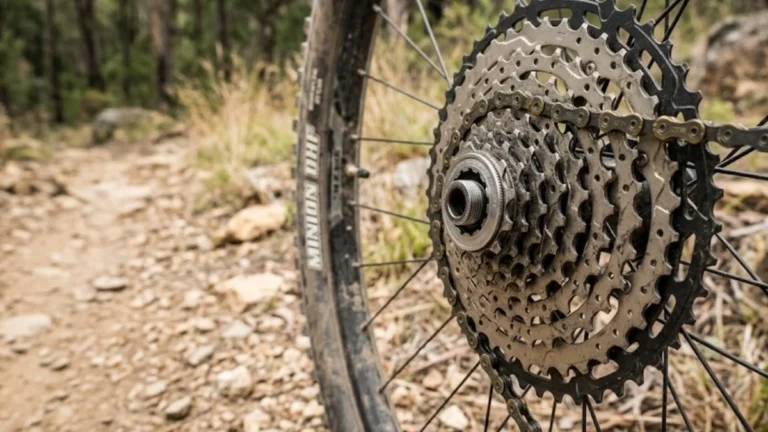
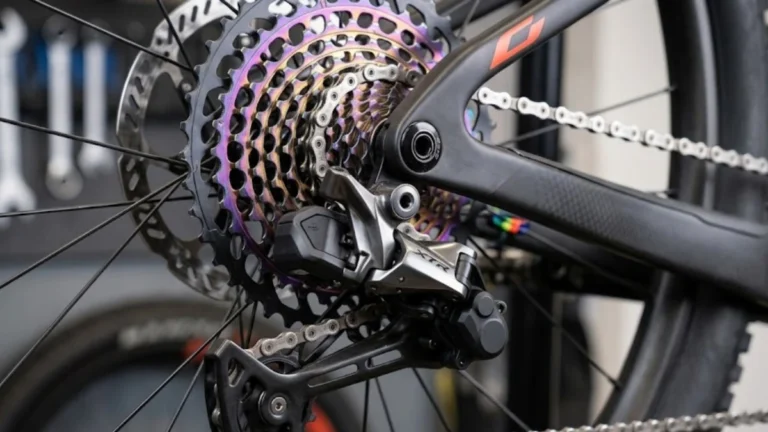
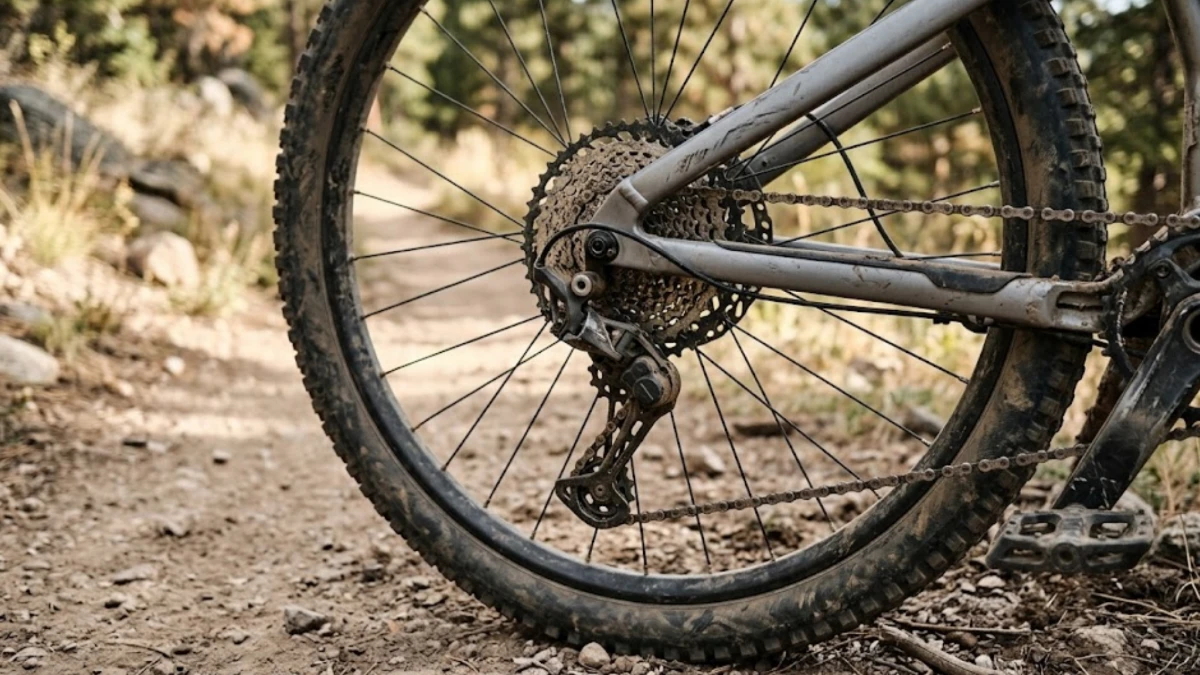
Flip to the rear wheel, and you’ll find the cassette — a stack of cogs ranging from small (hard to pedal, fast) to large (easy to pedal, slow, good for climbing). Modern cassettes have grown considerably, both in cog count and range, largely to make up for the fact that most bikes now have only one chainring up front. How cassette range and tooth counts differ between a budget build and a race-level one is worth understanding on its own, and I break it down in the cassette article in this cluster.
The Derailleurs
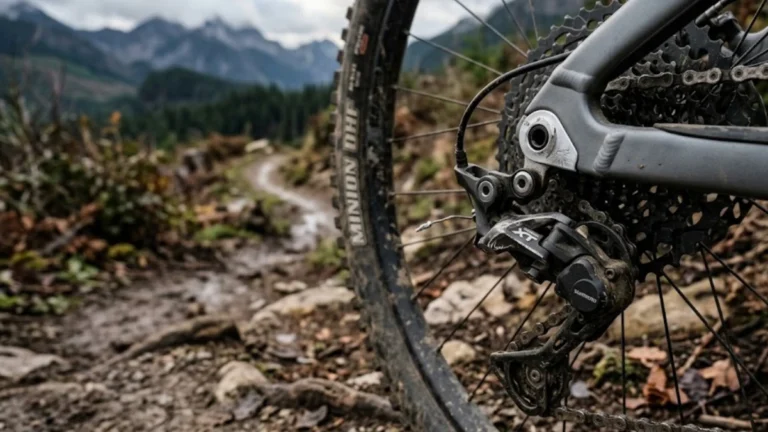
The rear derailleur is the part doing constant, active work every time you shift — it moves the chain across the cassette and manages chain tension as your suspension moves and terrain changes. Most modern rear derailleurs run a clutch mechanism that keeps tension consistent over rough ground, which cuts down on chain slap and dropped chains on technical descents.
A front derailleur, if your bike has one, handles the same job but for the chainrings up front. Fewer and fewer bikes ship with one of these days, for reasons I’ll get into below.
The Shifters
Shifters are your input device — the levers or triggers at your thumbs that tell the derailleurs what to do. There’s more variety here than people expect: trigger shifters, twist shifters, and now electronic options that skip the cable entirely. I compare the trigger, twist, and electronic options out there in a dedicated piece, since the right choice comes down more to feel and maintenance preference than performance.
The Crankset
Your cranks connect your pedals to the chainring and are the actual mechanical link between your legs and the rest of the system. Crank length affects pedaling clearance and leverage more than most beginners realize — it’s a small spec that’s easy to overlook when a bike’s marketed on suspension travel and wheel size instead.
How It All Works Together
Push the pedal, the crank turns, the chainring turns with it, and the chain carries that motion back to whichever cog on the cassette the derailleur has placed it on. Shift to a smaller cog and pedaling gets harder but you cover more ground; shift to a larger one, and it gets easier but slower. That’s the entire mechanical story — everything else is refinement.
On bikes that still run both shifters, REI’s guide to bike gears makes a point worth repeating: shift the front and rear one at a time rather than together, and avoid parking the chain at the extreme opposite ends of the front and rear gears at once — what riders usually call cross-chaining. I noticed this myself running a 2x setup years ago — cross-chained in the big ring and biggest cog, the chain ran loud and rough, and it wore out faster than it should have.
One more thing worth knowing before it surprises you mid-ride: derailleur hangers are built intentionally weak. If your bike goes down on the drive side, that small piece is designed to break on purpose rather than let the impact bend your frame or derailleur — cheap and replaceable instead of expensive and not.
Why Most Bikes Went From 3x to 2x to 1x
Older mountain bikes ran three chainrings up front paired with a modest cassette in back — plenty of range, but a lot of overlap between gears, more weight, and a front derailleur that needed regular adjustment. 2x setups trimmed that down to two rings, still with a front derailleur but fewer redundant gear combinations.
The real shift toward single-ring drivetrains started when SRAM released its XX1 groupset in October 2012 — the first dedicated 1x mountain bike drivetrain from a major manufacturer, as BikeRadar’s breakdown of 1x drivetrains lays out — and other brands followed with their own versions in the years after. The trade-off for going down to one ring is a wider-range cassette doing double duty — which is exactly what you’ll find on nearly every new mountain bike today, XC race bikes included.
I’ve ridden both. My old 2x hardtail had a slightly smoother gear spread and a genuinely useful top end for fire-road climbs turned descents. But I don’t miss adjusting a front derailleur before every ride, and I don’t miss dropped chains on rock gardens. For most riders doing normal trail miles, 1x is less to think about and less to maintain — which matters more once you’re a few seasons in and your bike isn’t new anymore.
Keeping a Drivetrain Alive
A drivetrain is a wear system by design — the chain stretches, the cassette teeth wear to match a worn chain, and eventually the whole thing needs replacing together rather than piece by piece. Ignore chain wear long enough, and you end up replacing a cassette that would’ve lasted another season if you’d swapped the chain on time. I cover the full routine — cleaning intervals, lube choice, and when to measure chain stretch instead of guessing — in our full drivetrain care routine, which is worth reading before your first deep clean rather than after your drivetrain starts skipping.
Wrapping Up
None of this is complicated once you’ve seen it broken down — a chain, a ring or two, a cassette, one or two derailleurs, and the shifters that control them. What trips people up is the terminology, not the mechanics. Once the vocabulary clicks, the rest of your bike does too.
If you’re working through the rest of your bike’s parts one system at a time, our main guide to mountain bike components is the right place to keep going from here.