
I still remember trying to help a buddy swap gears on his hand-me-down hardtail and realizing halfway through that nothing about it matched what I was used to. It turned out his bike had a freewheel, not a cassette—two systems that look similar from a few feet away but work completely differently underneath.
If you’ve ever wondered why your bike shop asked “cassette or freewheel?” before ordering parts, this is the difference, and why it matters more on a mountain bike than almost anywhere else — one of the fundamentals covered in our main guide to mountain bike components.
What the Rear Cogs Are Actually Doing
That cluster of toothed rings on your rear wheel is what gives you a gear range — an easy ratio for grinding up a loose, steep climb and a harder one for holding speed on a fire road descent. Every mountain bike needs this range, but how those cogs attach to the wheel and let you coast splits into two very different designs, and only one of them is really built for aggressive trail riding. If you want the full picture of how the rest of your drivetrain fits together, it’s worth reading alongside this one.
The Freewheel: The Older, All-in-One Design
A freewheel packs the gears and the coasting mechanism into a single sealed unit that threads directly onto the hub. Pedaling actually tightens it in place — no tools needed to install one, which is part of why it stuck around so long on budget and entry-level bikes.
The catch is that everything lives in one piece. Wear out a cog, and you’re usually replacing the whole cluster. And because it screws onto external threads on the hub shell, the axle bearings sit closer together than they do on a cassette hub — which brings us to the bigger issue for mountain biking.
The Cassette: The Modern Standard
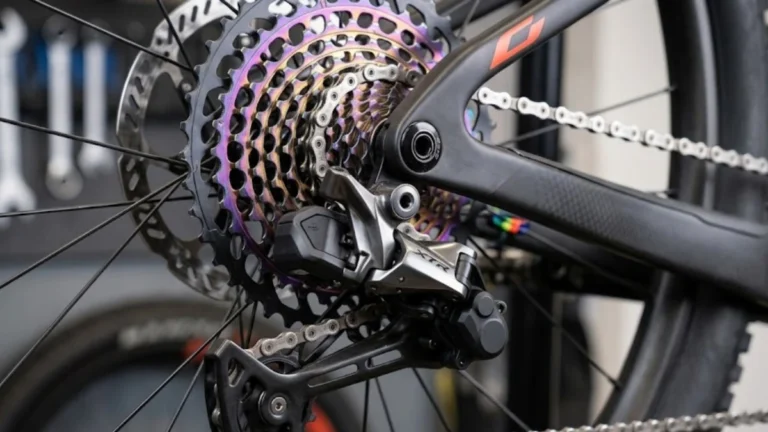
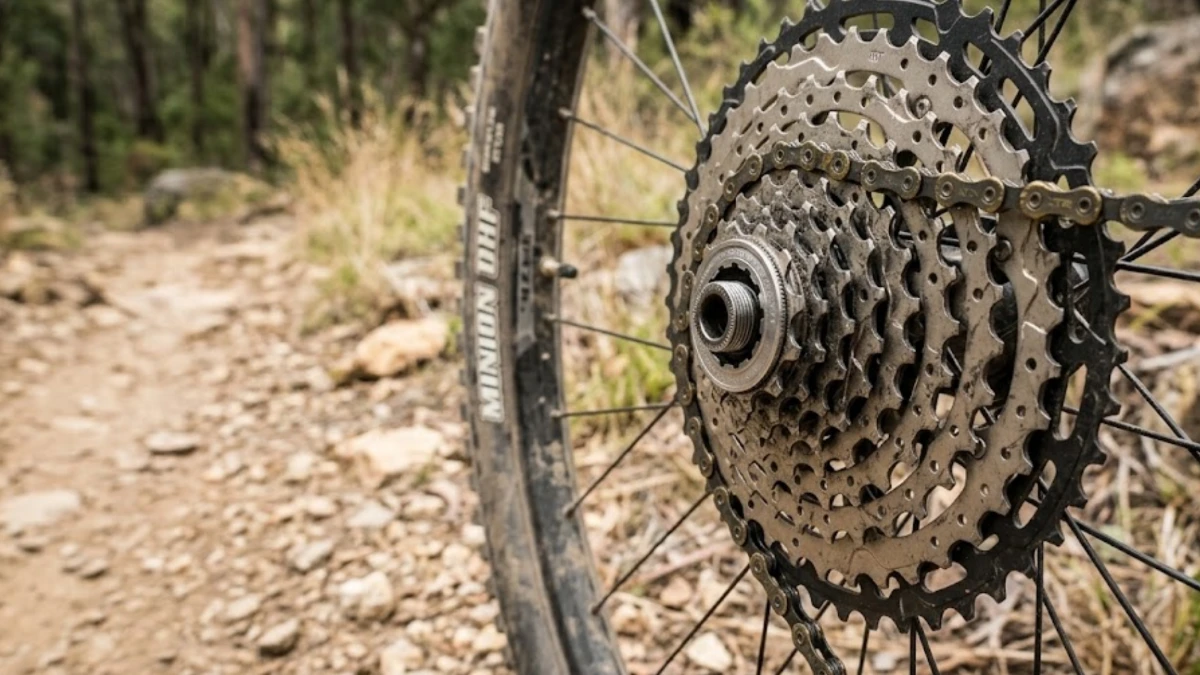
A cassette separates the two jobs. The coasting mechanism — the ratchet and pawls — lives inside a splined cylinder on the hub called the freehub body. The cassette itself is just a stack of individual cogs that slides onto those splines and gets locked in place with a single lockring. No threading, no torque tightening it further under pedaling load.
That split design is why cassettes run 8, 9, 10, or up to 12–13 speeds on modern mountain bikes, while freewheels typically top out around 6 or 7. It’s also why the axle bearings on a freehub-equipped wheel can be spaced farther apart, closer to the ends of the axle — which means real strength under the kind of repeated impact you get from rock gardens, drops, and hard-charging climbs. A bent axle from an undersized, poorly supported freewheel hub is a bad way to end a ride, and it’s exactly the failure mode cassette hubs were designed to eliminate.
Individual cogs on most cassettes can also be replaced without swapping the whole stack, and the wider gear range means you can actually run a 1x drivetrain with enough spread to climb loose fire roads and still hold a reasonable cruising gear — something a 6- or 7-speed freewheel can’t match.
How to Tell Which One’s on Your Bike
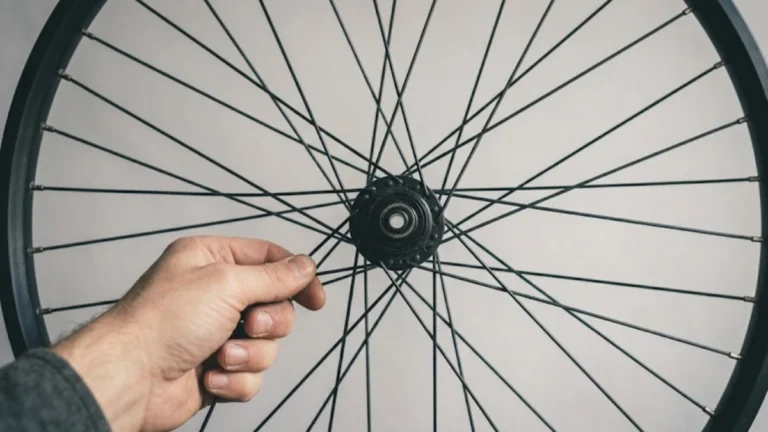
You don’t have to guess. Pull the rear wheel and spin the cogs backward while watching the small tool-fitting notches at the center. If those notches spin along with the cogs, you’ve got a cassette on a freehub. If they stay still while the cogs turn, it’s a threaded freewheel — this is the same spin test shops use to confirm which system they’re working on before reaching for a removal tool. It takes ten seconds and saves you from buying the wrong part.
Gear count is a decent shortcut too. More than 7 speeds in back, and you’re almost certainly looking at a cassette. Seven or fewer opens the door to either, especially on older or lower-end builds.
Why This Actually Matters on the Trail
This isn’t just spec-sheet trivia. I’ve seen riders push an old freewheel-equipped bike into terrain it was never built for and pay for it with a bent axle or a drivetrain that can’t shift cleanly under load on a technical climb. A cassette’s wider gear range and stronger hub support aren’t luxuries out here — they’re what let you spin up something absurdly steep in one gear and still have top-end left for the descent back to the trailhead. This ties directly into your hub’s engagement and spacing standards as much as it does the cassette itself — a wider, better-supported freehub is a big part of what lets a modern hub setup hold up off-road.
Maintenance-wise, cassettes also age more visibly, which works in your favor. REI’s drivetrain guidance recommends checking your cassette closely after roughly 1,000 miles, watching for cogs that have worn from rounded humps into shark-fin points—a clear signal it’s time to replace it before it starts skipping under load mid-climb.
Upgrading From a Freewheel to a Cassette
If you’re on an older bike with a freewheel and you’re starting to outgrow it, know this going in: you can’t just swap the gear cluster. The hub itself is built differently for each system, so upgrading means a new rear wheel, not just new cogs. For many riders on an aging entry-level bike, that’s the point where it makes more sense to put the money toward a proper cassette-equipped wheelset than to keep patching around a design that was never meant for real trail use. It’s also a good moment to think about shifter compatibility, since some older shifters won’t play nice with a wider modern cassette.
The Bottom Line
Freewheels aren’t broken — they did their job for decades, and you’ll still find them on cheap bikes and kids’ bikes for good reason. But if you’re actually riding trails, climbing loose pitches, and hammering rough descents, the cassette-and-freehub setup is what the sport moved to for a reason: more gears, a stronger axle, and parts you can service individually instead of replacing as a block. Get familiar with what’s spinning on your rear wheel — it pays off the next time you’re staring down a climb that needs every gear you’ve got. For the rest of the upkeep side, routine drivetrain care is worth building into your regular bike checks either way.