
I trashed a rear wheel on a rock garden a few seasons back — not a broken spoke, just a wheel so far out of true after one bad line that it wouldn’t clear the chainstay anymore. The shop that rebuilt it asked what lacing pattern I wanted, and I realized I’d never actually thought about it. Turns out that detail is a big part of why the wheel survived the crash in the first place.
This isn’t complicated once you see what’s actually happening between the hub and the rim. Here’s what the pattern does, which one you actually want, and why tension matters more than most riders assume.
What Spokes Actually Do
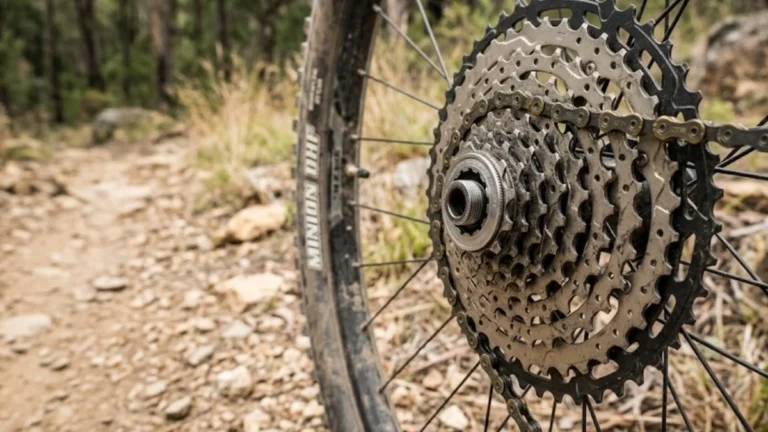
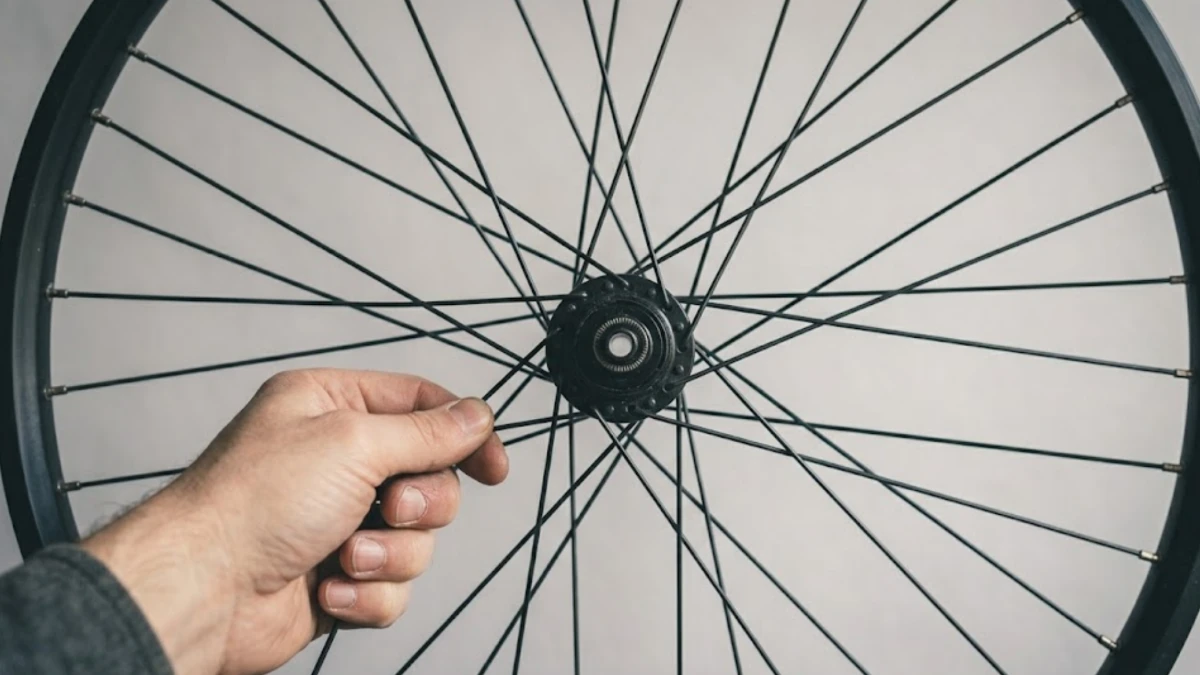
A spoke’s job sounds simple: connect the hub to the rim. What it’s actually doing is holding the rim in tension, not compression. Each spoke pulls the rim toward the hub, and that pull—evenly distributed around the wheel—gives a wheel its stiffness. Loosen a few spokes and the wheel doesn’t get droopy like a poorly strung tennis racket; it goes out of true and starts flexing under load in ways it shouldn’t.
The spoke head anchors into the hub flange, the other end threads into a nipple seated in the rim, and the wheel builder brings everything up to tension with a spoke wrench. How many spokes you’re working with, and how the hub itself is built, changes what patterns even make sense — that’s covered in more depth in our piece on how hub engagement and flange spacing affect the wheels you can build.
Reading a Lacing Pattern: Radial to 4-Cross
A lacing pattern is just how many other spokes a given spoke crosses on its way from hub to rim. Zero crosses is radial. From there you’re counting up: 1-cross, 2-cross, 3-cross, occasionally 4-cross.
Radial (0-cross): Spokes run straight out from the hub like sun rays, never touching another spoke. It’s the lightest option because the spokes are as short as they can be, but it has almost no ability to resist twisting force between the hub and rim. That makes it fine for a front wheel on a rim-brake road bike, and a non-starter for a driven mountain bike wheel that has to handle both pedaling torque and disc-brake force. I wouldn’t run it on any wheel that’s actually going to see a trail.
1-cross and 2-cross: Each step up adds a small amount of twist resistance. You’ll see 2-cross on lower spoke-count wheels — 24-hole builds mostly — where there isn’t room for a tighter cross pattern. It’s a compromise pattern, not really a mountain bike default.
3-cross: This is the one that matters. Each spoke crosses three others, and that crossing creates a web of small triangles between hub and rim — a shape that resists twisting far better than any straight line can. It’s the standard for 32-hole and 28-hole mountain bike wheels, front and rear, and for good reason: it handles pedaling torque, hard braking, and the constant off-axis loading of rough terrain without asking you to run heavier spokes to compensate. If you’re getting a wheel custom built for actual trail riding, this is what you ask for unless someone gives you a specific reason not to.
4-cross: Technically stronger against twist, but the spokes get long enough that they can rub or interfere near the hub flange, and the added length adds weight without a real strength gain over 3-cross for most riders. It shows up on high-spoke-count touring and cargo wheels more than anything you’d take down a descent.
Wheel size changes some of this math too — 27.5 vs. 29er wheels change spoke length and bracing angle, which is part of why a wheel builder asks what you’re riding before recommending a pattern.
Why Tension Matters More Than the Pattern
Here’s the part that trips people up: the lacing pattern sets the geometry, but tension is what actually makes the wheel strong. A 3-cross wheel built with sloppy, uneven tension will go out of true faster than a well-tensioned wheel in almost any pattern. The goal isn’t hitting one magic number on every spoke—it’s getting consistent relative tension across each side of the wheel, which is exactly what a shop checks when they run a tensiometer over your build. Park Tool’s own guidance on spoke tension treats even, relative tension as the real target, not a single ideal figure, since rim and spoke combinations vary too much for one number to apply universally.
That’s also why a wheel that’s pinging or feels vague isn’t necessarily built with the wrong pattern — it’s more often a tension problem, and that’s a shop visit, not a pattern swap.
What This Means When You’re Buying or Building Wheels
If you’re buying a complete mountain bike, you don’t need to think about any of this — nearly every reputable brand ships 3-cross builds on 28- or 32-hole wheels for exactly the reasons above. Where it actually matters is custom builds and wheel upgrades. REI’s wheel-buying guidance makes the same point from the buyer’s side: higher spoke counts add strength, and more crosses add more strength on top of that, which is the trade-off you’re making anytime you consider a lower-spoke-count or radial-adjacent wheelset for weight savings.
If you’re weighing a wheel upgrade, spoke count and lacing pattern are part of a bigger set of decisions covered in our guide to upgrading your wheels — rim width, hub engagement, and internal width all matter alongside how the spokes are laced. And for the full picture of how wheels fit into the rest of the bike, our full guide to mountain bike components is the place to start.
None of this is exotic knowledge. It’s the kind of thing that’s obvious once a wheel builder walks you through it once, and useless right up until the day your wheel goes out of true on a rock garden and you’re standing there wondering why.