
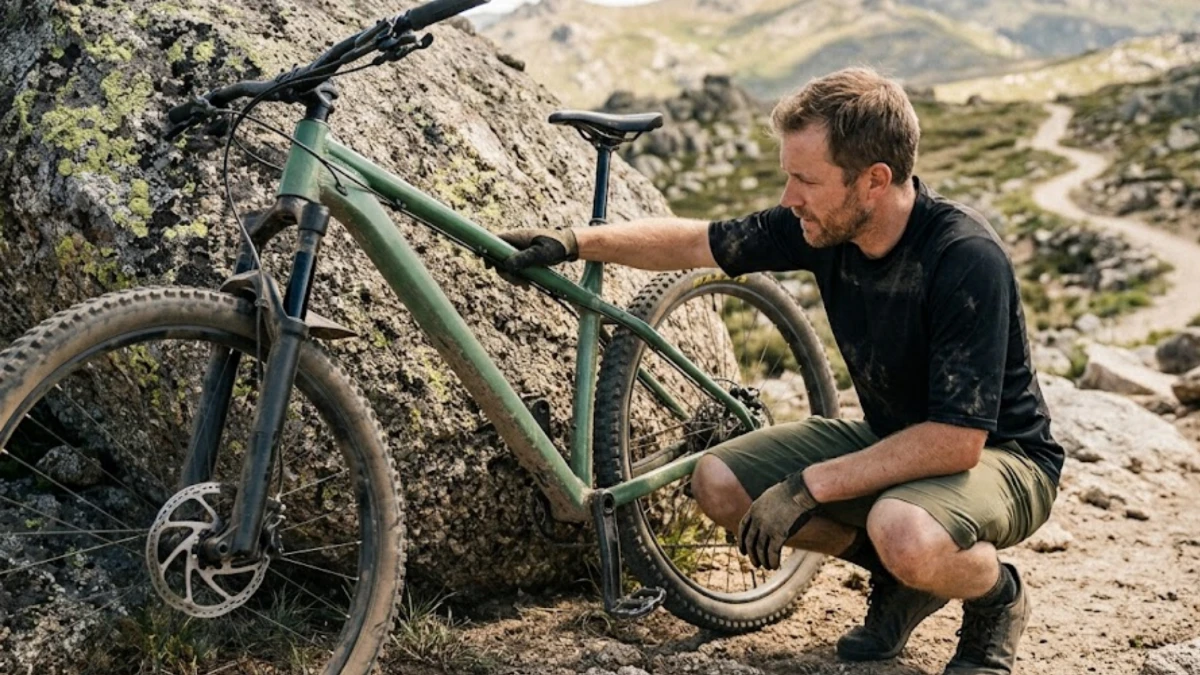
I’ve dented an aluminum frame on a rock garden and kept riding it for three more seasons. I’ve also watched a buddy’s carbon top tube crack from a hit that should’ve just left a scuff. Frame material isn’t a spec sheet detail — it’s the difference between walking your bike out or riding it out.
This is the part of your build that everything else bolts onto, so it’s worth understanding before you fall for a paint job. Here’s what each material actually does on the trail, as covered in our main guide to mountain bike components.
Why Frame Material Actually Matters
The frame sets the tone for the whole bike. It decides how much the bike weighs on your shoulder during a hike-a-bike, how it feels when you’re grinding up a fire road, and how much trail chatter makes it into your hands and hips on a rough descent. Two bikes with identical geometry and the same fork can ride completely differently depending on what the frames are made of.
None of this happens in isolation, either. A stiff frame paired with a plush fork feels different than a compliant frame paired with a harsh one — as I’ve mentioned when talking about hardtails and full suspension, the frame is one piece of a bigger system. But it’s the piece you can’t upgrade later without buying a whole new bike, so it deserves real thought upfront.
Aluminum: The Workhorse Most Riders Should Actually Buy
Aluminum is what’s under most riders’ hands right now, and for good reason. It’s light enough to climb well, stiff enough to feel direct when you’re putting power down, and it doesn’t demand a second mortgage.
What it gets right:
- Efficient power transfer — stomp on the pedals and the bike moves, no noticeable flex
- Genuinely good value — you get a capable trail bike without carbon pricing
- Shrugs off the everyday stuff — pedal strikes, rock strikes, the odd tip-over in the parking lot
Where it falls short:
- Buzzy on chattery terrain. Aluminum doesn’t damp vibration the way steel or carbon does, so you feel more of what the trail’s doing
- A hard enough hit can leave a visible dent, even if the frame’s structurally fine
I ran an aluminum hardtail as my only bike for two seasons of technical singletrack before I ever touched carbon, and it never once held me back. If you’re new to the sport, or you want a bike that does everything reasonably well without babying it, aluminum is the honest answer — not the compromise answer.
Best for: beginner to intermediate riders, anyone who wants a do-it-all trail bike, budget-conscious buyers who’d rather spend on a dropper post or better tires than a lighter frame.
Carbon Fiber: Light, Tunable, and Not Cheap About It
Carbon isn’t metal at all — it’s woven fiber sheets soaked in resin and molded under heat and pressure, closer to how a surfboard gets built than how a frame gets welded. That process is exactly what makes carbon interesting: engineers can stack the fiber layers to make one part of the frame rigid and another part flex slightly, tuning the ride in ways a metal tube can’t match.
What it gets right:
- The lightest frames on the market, which you feel most on sustained climbs
- Genuinely smooth over chatter — carbon damps vibration well, which matters on long rides
- Can be engineered for stiffness exactly where power goes in and compliance exactly where comfort matters
Where it falls short:
- Expensive, and the gap between a carbon frame and an aluminum one isn’t small
- A direct rock strike in the wrong spot can crack or delaminate the material in a way a dent on aluminum doesn’t — Wikipedia’s overview of bicycle frame construction covers why carbon’s impact resistance behaves differently from metal frames, since the failure mode is about localized fiber damage rather than a shape that just bends.
- Repairs need a specialist, not your average frame shop with a welder
I’ve got a carbon full-suspension bike I take on longer days now, and the difference on a four-hour ride is real — less fatigue in my hands and forearms by the end. But I wouldn’t hand a beginner a carbon frame and tell them to learn rock gardens on it. That’s a job for aluminum or steel first.
Best for: riders who already know their style and are chasing weight savings or all-day comfort, racers, anyone doing enough vertical that grams matter.
Steel: The Comeback Nobody Saw Coming
Steel was the original mountain bike frame material, but it was pushed aside once aluminum showed up, lighter and cheaper to mass-produce. It never went away — modern steel frames use chromoly alloys that are a different animal from the heavy tubing on old department-store bikes.
What it gets right:
- That “springy,” lively ride feel riders talk about — steel flexes just enough to take the edge off rough trail without feeling vague
- Extremely forgiving. Dents aren’t usually structural, and if it does actually crack, a welder can often fix it
- A classic look with slim tubes that a lot of riders genuinely prefer over boxy aluminum or carbon shapes
Where it falls short:
- Heavier than aluminum or carbon — you notice it on sustained climbs
- Can rust if the frame isn’t cared for, though most modern builds are treated against it
Steel hardtails have a cult following for a reason. I’ve ridden a chromoly hardtail on all-day rides where the extra frame weight barely registered next to how good it felt on washboard singletrack. It’s not the bike for someone chasing Strava segments, but it’s a genuinely great one for someone who wants a bike they’ll still love — and can still fix — in fifteen years.
Best for: bikepackers, riders who prioritize a forgiving ride and long-term repairability, anyone who wants a “forever” hardtail.
Titanium: The One Riders Save Up For
Titanium is the rarest of the four, mostly because it’s genuinely difficult to work with. It’s not cheap, and not every brand bothers building with it — you’ll usually find it from smaller, specialist builders rather than the big-box names.
What it gets right:
- Ride quality that a lot of riders describe as steel’s liveliness with less weight behind it
- Doesn’t rust, resists fatigue over years of flexing, and holds up in ways aluminum and even carbon can’t match long-term. REI’s frame materials breakdown is a solid reference if you want a deeper look at how titanium compares to steel and aluminum on strength versus weight
- A raw, brushed, or polished finish is a lot of riders just like
Where it falls short:
- The most expensive option here, by a real margin — material cost and labor both drive it up
- Poorly designed titanium frames can feel flexy under hard pedaling if the tubing isn’t sized right
- Harder to find. You’re often ordering from a boutique builder, not picking one off a shop floor.
I haven’t owned a titanium frame myself, but I’ve ridden a friend’s on a long backcountry route, and it’s easy to see the appeal — it splits the difference between carbon’s lightness and steel’s forgiving feel. It’s just a genuine investment, not an impulse buy.
Best for: riders on a budget who want a frame that’ll outlast several bikes’ worth of components; comfort-focused riders who still want something light.
Quick Comparison
-$$
| Material | Weight | Ride Feel | Durability | Relative Cost |
|---|---|---|---|---|
| Aluminum | Medium-light | Stiff, direct, can feel buzzy | Good — dents rather than cracks | $$ |
| Carbon Fiber | Very light | Smooth, tunable, stiff where needed | Excellent, but vulnerable to sharp impacts | $$$$ |
| Steel (chromoly) | Medium-heavy | Smooth, springy, forgiving | Excellent — repairable if damaged | |
| Titanium | Light | Smooth, lively, damped | Outstanding — resists fatigue and corrosion |
Picking the Right One for You
It really comes down to three questions: what’s your budget, how are you actually riding, and what do you personally value on the trail — weight, comfort, or bomb-proof durability?
If you’re new to the sport, I’ll say what I tell most people who ask me in person: buy aluminum first. It’s capable enough to teach you what you actually want from a bike, and it won’t punish a beginner’s mistake the way carbon might. Once you know your riding style — long days, technical descents, weekend laps — the material question answers itself.
It’s also worth remembering the frame doesn’t work alone. If you’re already thinking about ride feel and flex, swapping to lighter wheels changes how a bike feels almost as much as the frame material does — components work together, not in isolation.
Go test-ride a few if you can. A shop that lets you take an aluminum and a steel hardtail back-to-back on the same trail will teach you more about frame feel in twenty minutes than any spec sheet will.