
I front-flatted into a rock garden on a local descent a few seasons back because I’d let a set of worn mechanical pads go too long — that “on/off” lever feel I’d gotten used to suddenly wasn’t there when I needed it. I’ve run both mechanical and hydraulic disc brakes across a hardtail and a couple of long-travel bikes since, and the difference in control isn’t marketing spin. This guide breaks down how each system works, where it earns its keep, and how to pick the right one, as part of our full Mountain Bike Components Guide.
Why Brakes Matter More Than You Think
On a flat gravel path, almost any brake works fine. Drop into a steep, loose descent with a blind corner ahead, and the gap between a mediocre brake and a great one shows up fast — not in how hard you can stop, but in how precisely you can control your speed without locking up a wheel.
Mountain biking throws mud, grit, sustained descents, and sudden obstacles at your bike in no particular order. Brakes have to handle all of it consistently — wet or dry, five minutes in or forty minutes into a long descent — without fading or grabbing unpredictably.
How Disc Brakes Actually Work
Nearly every modern mountain bike runs disc brakes. The mechanics are simple:
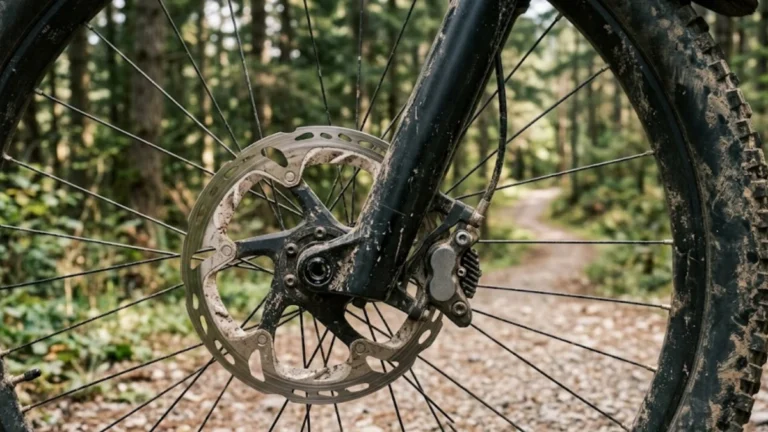
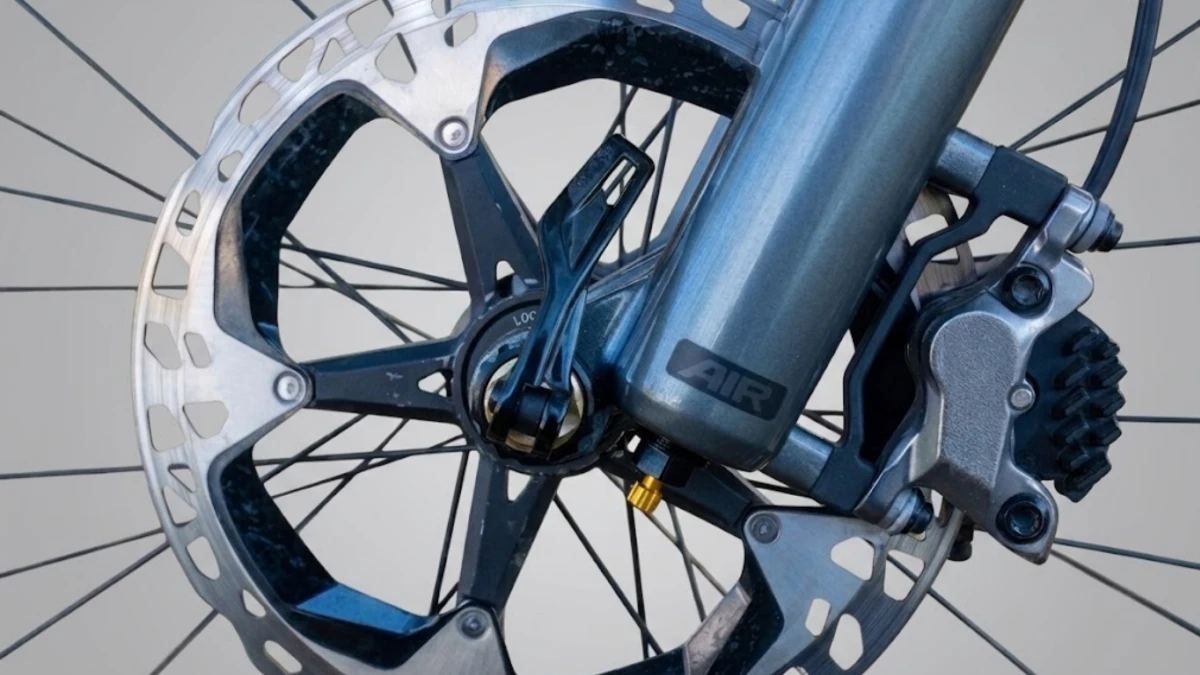
You pull a lever at the bar. That pulls either a cable or pushes hydraulic fluid down to a caliper mounted near the wheel. The caliper squeezes brake pads against a rotor — the metal disc bolted to your hub — and that friction slows the wheel down.
The type of brake determines how that signal travels from your hand to the caliper, and that’s where mechanical and hydraulic systems actually diverge.
Mechanical vs. Hydraulic Disc Brakes
Mechanical Disc Brakes
Mechanical brakes work like an old-school cable-actuated shifter: squeeze the lever, a steel cable pulls, the caliper clamps the pads onto the rotor. It’s a direct physical link with no fluid involved.
They’re simple to live with. There’s no bleeding, no special fluid, and adjusting cable tension or swapping a housing is something most riders can do themselves with basic tools. Bikes specced with mechanical brakes also tend to cost less, which matters if you’re building up a budget hardtail or just getting into the sport.
The trade-off is feel. Mechanical brakes deliver less modulation — the ability to apply exactly the right amount of stopping force rather than an all-or-nothing squeeze — and cables stretch slightly over time, so you’ll be making small adjustments more often than you would with hydraulics. On mellow trails or a gravel commute, none of that matters much. On a rocky, technical descent, it starts to.
Hydraulic Disc Brakes
Hydraulic brakes replace the cable with a sealed hose full of fluid — mineral oil or DOT fluid, depending on the brand. Squeeze the lever, the fluid pushes pistons in the caliper, and those pistons clamp the pads onto the rotor. It’s the same basic principle as a car’s braking system, scaled down.
The upside is real: less lever effort for more stopping power, and a level of modulation that lets you feather your speed through a rock garden instead of grabbing a fistful and hoping. Hydraulic systems also self-adjust as pads wear, so lever feel stays consistent ride after ride, and your hands stay fresher on long descents since you’re not squeezing as hard.
The cost is complexity. If you ever need to bleed a hydraulic system or chase down a spongy lever, it’s a more involved job than a cable brake — most riders either learn the process properly or leave it to a shop, and our guide to bleeding a hydraulic system or chasing down a spongy lever walks through what that actually looks like. Bikes with hydraulic brakes also cost more upfront.
For actual trail riding — climbing, descending, riding in the wet — hydraulic disc brakes are the better tool. The control they offer on technical terrain isn’t something mechanical brakes can fully match.
What About Rim Brakes?
You’ll still see rim brakes on older bikes and some basic city bikes — pads squeezing directly onto the wheel rim instead of a rotor. They’re essentially gone from modern mountain bikes for good reason. Disc brakes deliver more consistent stopping power in wet or muddy conditions, and it’s far cheaper to replace a worn rotor than an entire wheel rim, which is exactly the kind of long-term cost rim brakes rack up when pads chew through the braking surface, as REI’s comparison of rim and disc brakes lays out. For anything beyond pavement, disc brakes are the only real option worth considering.
What to Weigh Before You Buy
How much stopping power do you actually need? If you’re riding steep, sustained descents, hydraulic wins — it’s not close.
Does modulation matter to your riding? Hydraulic brakes do what they do best: let you feather speed through a corner rather than grab and release. If you ride technical singletrack regularly, this is the difference you’ll feel first.
What’s your appetite for maintenance? Mechanical brakes are simpler to service yourself. Hydraulic brakes reward riders willing to learn the basics of bleeding, or who are fine paying a shop once or twice a season.
Where and how are you actually riding? Flat, dry fire roads are forgiving of mechanical brakes. Steep, wet, technical trail riding is where hydraulic brakes justify their cost — and if you’re pushing hard enough on climbs to need it, dialing in your drivetrain matters just as much as your brakes for overall control on the bike.
What’s the budget reality? Mechanical brakes cost less to buy and maintain. Hydraulic brakes are the better long-term investment if you’re riding real trails regularly — the added control tends to pay for itself in confidence and, frankly, fewer offs.
Rotor Size and Other Parts Worth Knowing
A few terms come up constantly once you start shopping:
The caliper clamps the pads onto the rotor. The rotor is the disc itself, and it comes in a handful of common sizes — 160mm, 180mm, 200mm, and 220mm. A larger rotor gives you more leverage and more surface area to shed heat, which matters most on long descents where a smaller rotor can start to fade. As a rough starting point, SRAM’s own brake tuning guidance puts cross-country setups at 160mm, trail and all-mountain riding at 180mm, and downhill or freeride at 200mm or larger — though the right call still depends on rider weight, terrain, and how your frame and fork are rated. It’s worth reading up on how rotor size and heat management actually work before you buy. Brake pads themselves wear out and need periodic replacement; they come in different compounds that affect bite and longevity, but that’s a rabbit hole for another day.
Bedding In New Brakes
New pads and rotors need to be bedded in before they perform at their best. That means riding at a moderate pace and doing a series of firm — not panic-stop — braking efforts from speed, letting the brakes cool between each one. It’s a five-minute process that makes a real difference in how consistent your brakes feel from day one, and skipping it is the most common reason a brand-new hydraulic setup feels underwhelming at first.
Which Should You Actually Buy
If you’re riding smooth trails or a gravel path and keeping costs down, mechanical disc brakes are a legitimate choice — not a compromise, just a different tool for easier terrain.
If you’re riding real singletrack, hitting descents with any consequence, or riding in the Pacific Northwest’s version of “dry,” spend the extra money on hydraulic. The control is worth it, and it’s the upgrade most riders notice immediately once they’ve felt it.
If your current bike came with mechanical brakes, there’s no need to rush an upgrade. Ride it, learn what you actually want out of a brake, and make the swap when the trade-offs start to bother you, not because a spec sheet told you to. And remember, braking only works as well as the contact patch underneath you — how your tire setup affects grip and braking is worth understanding alongside your brake choice, not after it.