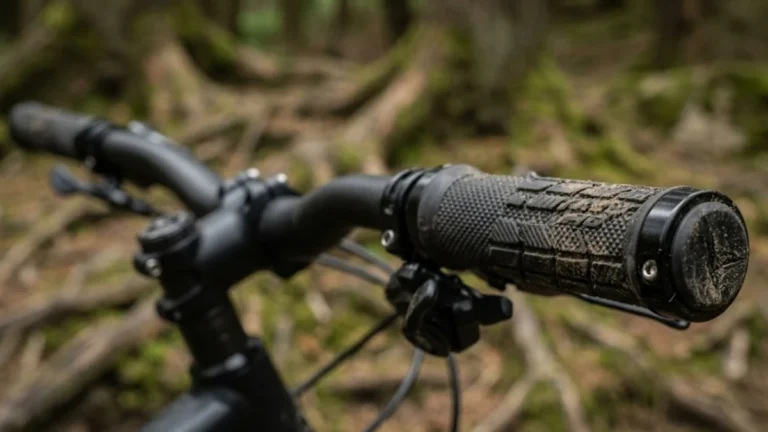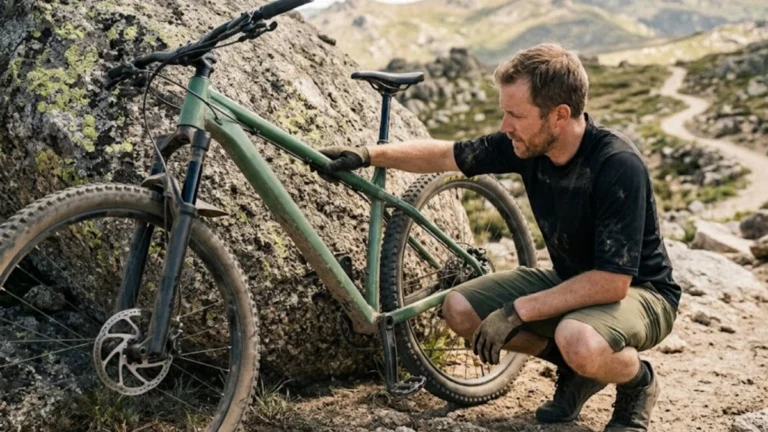

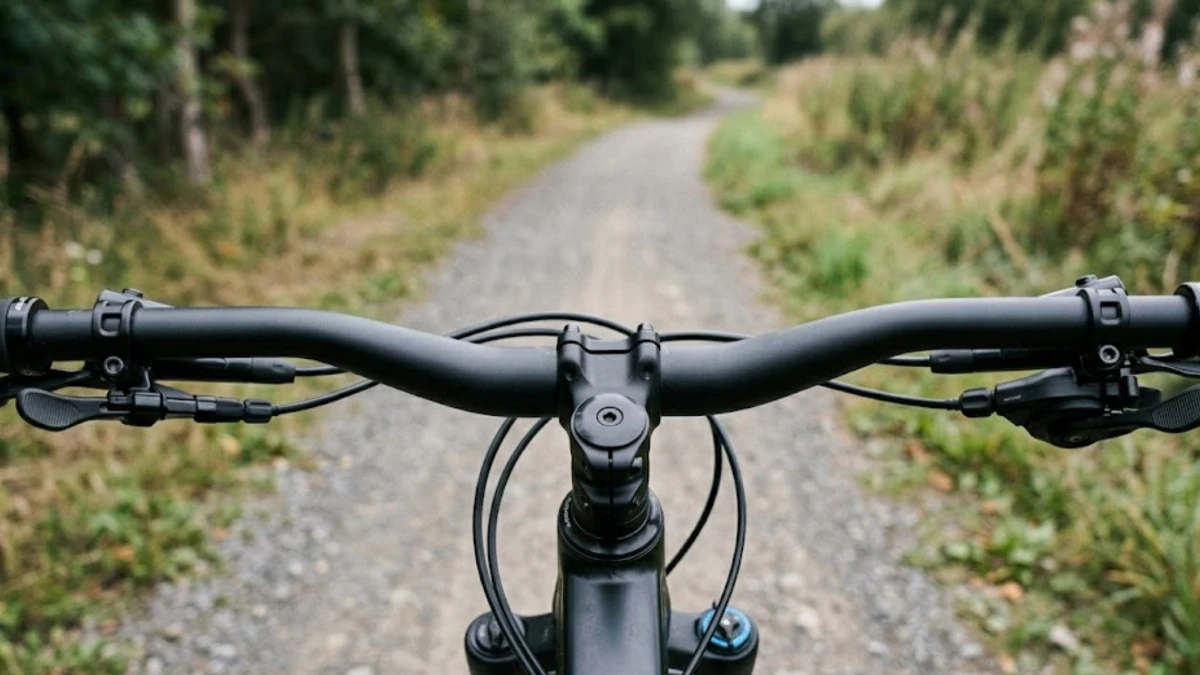
I trimmed 40mm off a stock handlebar with a hacksaw and a torpedo level in my garage a few seasons back, convinced narrower meant faster. It didn’t — it just meant sore shoulders on anything technical. Width, rise, and sweep aren’t cosmetic specs. They’re the difference between a bike that disappears under you and one you’re constantly fighting.
Handlebar Width: More Leverage, More Trade-offs
Width is the straight-line measurement from end to end, and it’s grown steadily over the past decade as trail and enduro bikes have leaned into stability over pure efficiency. More width means more leverage over the front wheel, which translates to steadier steering through rock gardens and roots. It’s not free, though. Push width past what your shoulders can comfortably handle, and you’re trading control for strain. REI’s breakdown of handlebar width and shoulder mechanics gets into the actual biomechanics here — your shoulder is strongest and most stable in a specific rotated, slightly-back position, and an overly wide bar tends to push you into the opposite, shrugged-up posture instead.
Most current trail and enduro bars run 760mm to 800mm stock, and cross-country bars often sit narrower, closer to 720mm to 760mm, prioritizing a lower frontal profile over outright leverage. There’s no universal right number — your shoulder width, arm length, and how much you’re bombing through tight tree gaps all factor in. If your shoulders ache after every ride, or you’re clipping bar ends on narrow singletrack, that’s your cue to reassess, not just tough it out.
Cutting down is the standard way to dial in width without buying multiple bars — most aluminum and carbon bars are sold long specifically so you can trim in small increments. Go slow. I’ve seen riders lop off 20mm at a time and end up narrower than they meant to be, with no way to add it back.
Handlebar Rise: Setting Your Body Position
Rise is the vertical distance between the bar’s centerline at the stem clamp and at the grips. Flat bars sit near zero; riser bars climb from there, typically in the 20mm to 50mm range on modern trail and enduro setups. Mountain Bike Action’s technical rundown on handlebar geometry puts it plainly: backsweep is the angle at which the bar bends back from the stem toward a comfortable hand position. At the same time, upsweep is a separate measurement — how far the bar angles upward from the stem. Two related but distinct numbers, and it’s worth knowing which is which before you shop.
Low rise puts more weight over the front wheel — useful on steep climbs where you’re fighting to keep the front end planted, and it’s why a lot of cross-country race bars stay flatter. High rise shifts your weight rearward, which is exactly what you want when dropping into steep, loose terrain where getting pitched over the bars is the real risk. I run more rise on my enduro bike than my hardtail for this reason alone; the hardtail spends more time climbing, the enduro bike spends more time pointed downhill.
If you’re not sure where to start, stem spacers are the cheap way to test rise before committing to a new bar — stack or drop them to shift your hand height a few millimeters at a time and see what actually changes in how the bike handles.
Handlebar Sweep: Where Your Wrists Actually Live
Sweep is the one riders overlook most, and it’s arguably the one your body notices fastest on a long day. Backsweep — how far the bar angles back toward you — typically sits between 7 and 9 degrees on modern bars, matching the natural angle your wrists want to hold when your arms hang relaxed. Upsweep is smaller, usually 4 to 6 degrees, and fine-tunes wrist and elbow alignment on top of what backsweep is already doing.
Get this wrong, and you’ll feel it as numbness or tingling on longer rides rather than an obvious handling problem. Cockpit width plays into this too — spread too wide across the bar and stem, and hand fatigue creeps in regardless of how good your sweep angle is on paper.
The Three Work Together
None of these numbers exist in isolation. Add rise and your effective reach shortens slightly, which changes how a given stem length feels — worth understanding through how reach and stem length interact with your bar before you assume the bar alone is the problem. Go wider and a touch more backsweep often keeps wrists happier at the new hand position. Even grip diameter changes how sweep feels in your hands, since a fatter grip effectively narrows the usable angle range your palm sits in.
This is standard territory in our main guide to mountain bike components — handlebars rarely get evaluated on their own merits precisely because they’re so tied to everything else in the cockpit, including your overall cockpit and seated position.
Dialing In Your Setup
Don’t overthink a stock bar on a new bike — most are a reasonable all-around compromise, and the smarter move is riding it enough to know what’s actually bothering you before you start swapping parts. Sore shoulders after every ride, a front end that feels vague on descents, or hands going numb past the first hour are all specific enough to point you toward width, rise, or sweep, respectively.
Handlebars are one of the cheaper components to experiment with, and a decent shop will let you test a few setups before you buy. Please confirm the clamp diameter matches your stem before you order anything — a mismatch is more common than people expect.
Get the width, rise, and sweep right for your body and riding style, and the bar stops being something you think about at all. That’s the goal — not a perfect setup, just one that gets out of the way.